- 250%
- rise in residential land prices since 2004, according to the CBS
- 40%
- maximum allocation for public needs without compensation
- 1.9.2026
- the new appraisal standard for land is in force
Two parts in one price
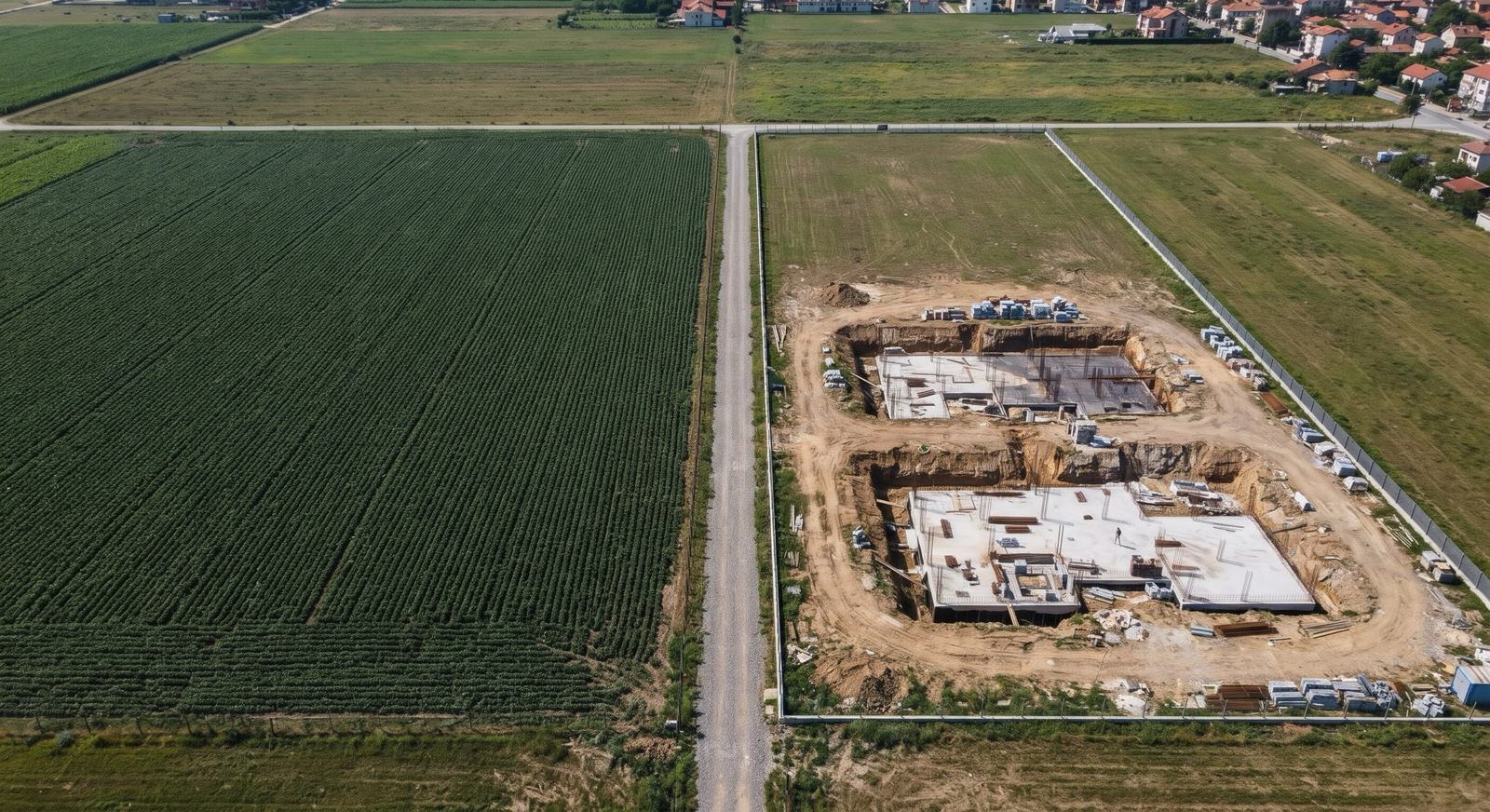
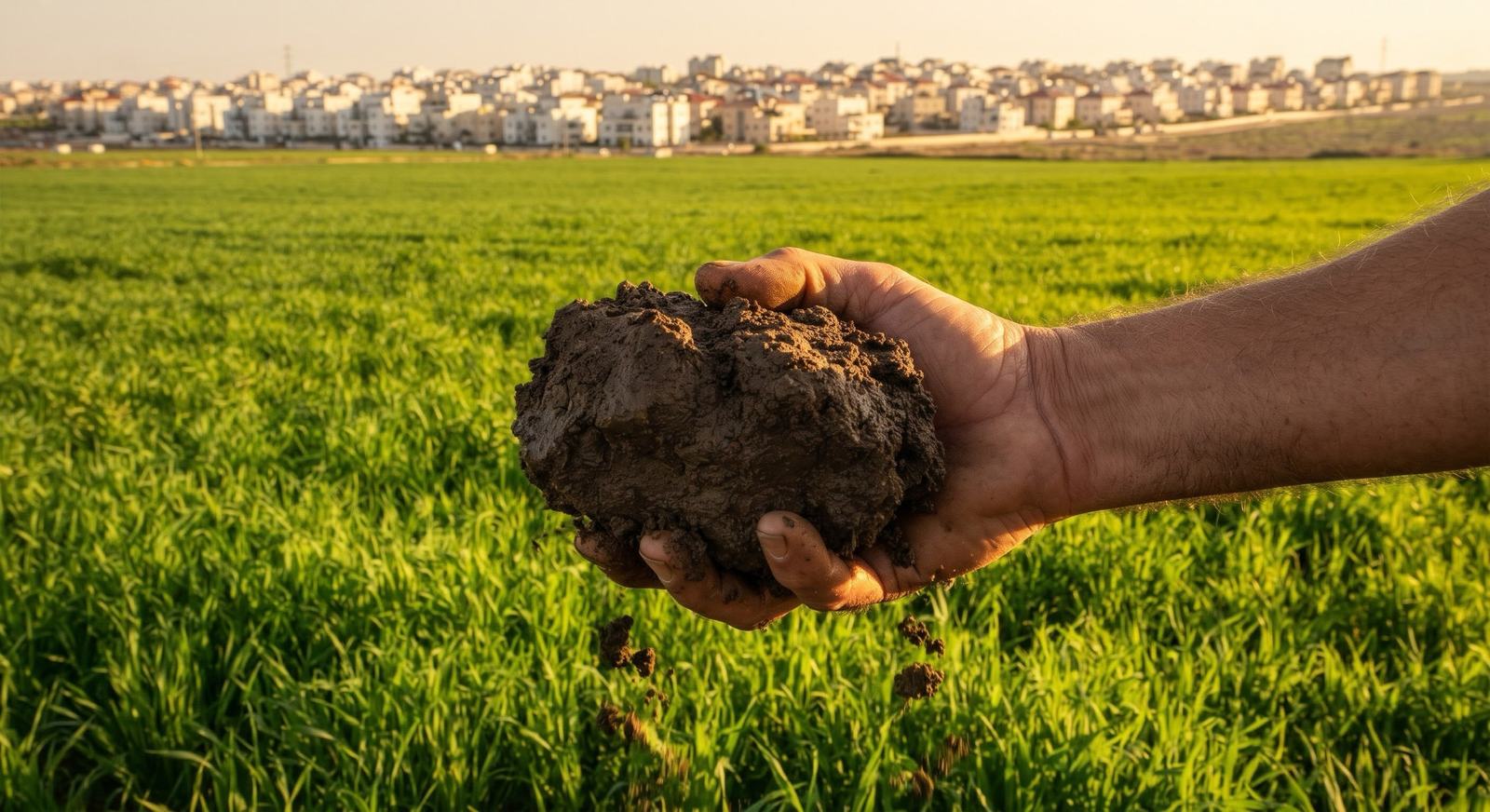
The value of agricultural land is made up of two parts. The first is what can be done with it today: crops, an orchard, leasing to a farmer. This part is small and hardly depends on location. The second is the chance that in the future the land will change designation to construction. This part grows the closer the land is to an existing city, and the more advanced the planning in the area.
That is why two agricultural parcels of the same size can sell at very different prices. The price reflects the forecast, not the soil. On what determines the forecast: TAMA 35 and the comprehensive outline plan.
What comes off the value on the way to construction
Nearby land for construction is worth far more than agricultural land. But whoever holds agricultural land will not receive the whole difference:
Allocations for public needsPart of the land goes to roads, public buildings and public open space (SHATZAP). Under the Planning and Building Law, expropriation of up to 40% without compensation is possible. In reparcellation this appears in the allocation table: Balancing and allocation table.
Betterment levy (hetel hashbacha)50% of the increase in value caused by the plan, paid on a sale or on a permit. Details: Betterment levy.
Planning and development costsAppraisers, planners, lawyers, and later development levies and government fees.
Time and riskMoney that waits for years is worth less today. And there is always a chance that the plan will not be approved, or will be approved with a different designation than hoped for.
A sample calculation: from future value to today's price
This is how the price of agricultural land can be checked. The calculation is in percentages, because the value differs from area to area. Start from the value of the land after the plan is approved, 100%, and work back to today:
- 1Value of the land after approval: 100%
The value of your share once the plan is approved, after the allocations for public needs. This is the starting point.
- 2Less the betterment levy: about 48%
50% of the increase in value. If the agricultural land is worth about 4% of the approved value, the increase is about 96%, and the levy about 48%.
- 3Less planning and development: about 12%
A share of the plan's costs, appraisers, lawyers and development levies. About 40% remains.
- 4Discounting for time
At an interest rate of 7% a year: after 3 years about 33% remains, after 5 years about 28%, and after 8 years about 23%.
- 5Times the probability
An advanced plan, 3 years and a 90% probability: about 29% of the approved value. A plan at the start of the road, 8 years and a 60% probability: about 14%. The planning stage changes the result twofold and more.
What the new appraisal standard sets
In April 2026 the Real Estate Appraisers Council approved Standard 3.1, which took effect on September 1, 2026 and replaces Standard 3.0 from 2009. It sets out how an appraiser values land, including agricultural land with expectations of a change of designation. Four rules worth knowing:
Comparison comes firstThe comparison approach is the preferred one. At least three relevant transactions are required, and a sale price is preferable to an asking price.
Private versus ILAAnyone comparing private agricultural land with land leased from the Israel Land Authority (ILA) must adjust the potential component. On the difference: Private land or ILA land.
A plan on the wayWhen a plan is in the planning stages, the appraiser may discount the future value net of expenses, according to the length of the deferral. The result is considered less reliable than a comparison, and its weight rises as the planning advances.
Limited adjustmentsThe total adjustments in a comparison transaction should not exceed about 35%. A transaction that requires more than that is probably not similar enough.
What has happened to land prices over the years
In June 2026 the Central Bureau of Statistics (CBS) published for the first time a residential land price index, based on ILA tenders. According to it, since 2004 residential land prices have risen by about 250%. In recent years there has been a decline: from the 2022 peak a cumulative decline of about 25% has built up, of which about 4.9% was in 2025.
The index measures approved land sold in state tenders. In agricultural land, every change in the future value is felt more strongly, in both directions.
Checklist: before you pay for agricultural land
- 01What is the designation today, and what stage is the plan at? No plan, in preparation, deposited or approved. This is what determines the time and the probability.
- 02What is approved land nearby worth? Reported transactions in building plots in the area, per net m² or per housing unit.
- 03How much will come off along the way? Allocations, the betterment levy, planning and development costs.
- 04How many years, at what interest rate? Discount at the return you would get on another investment.
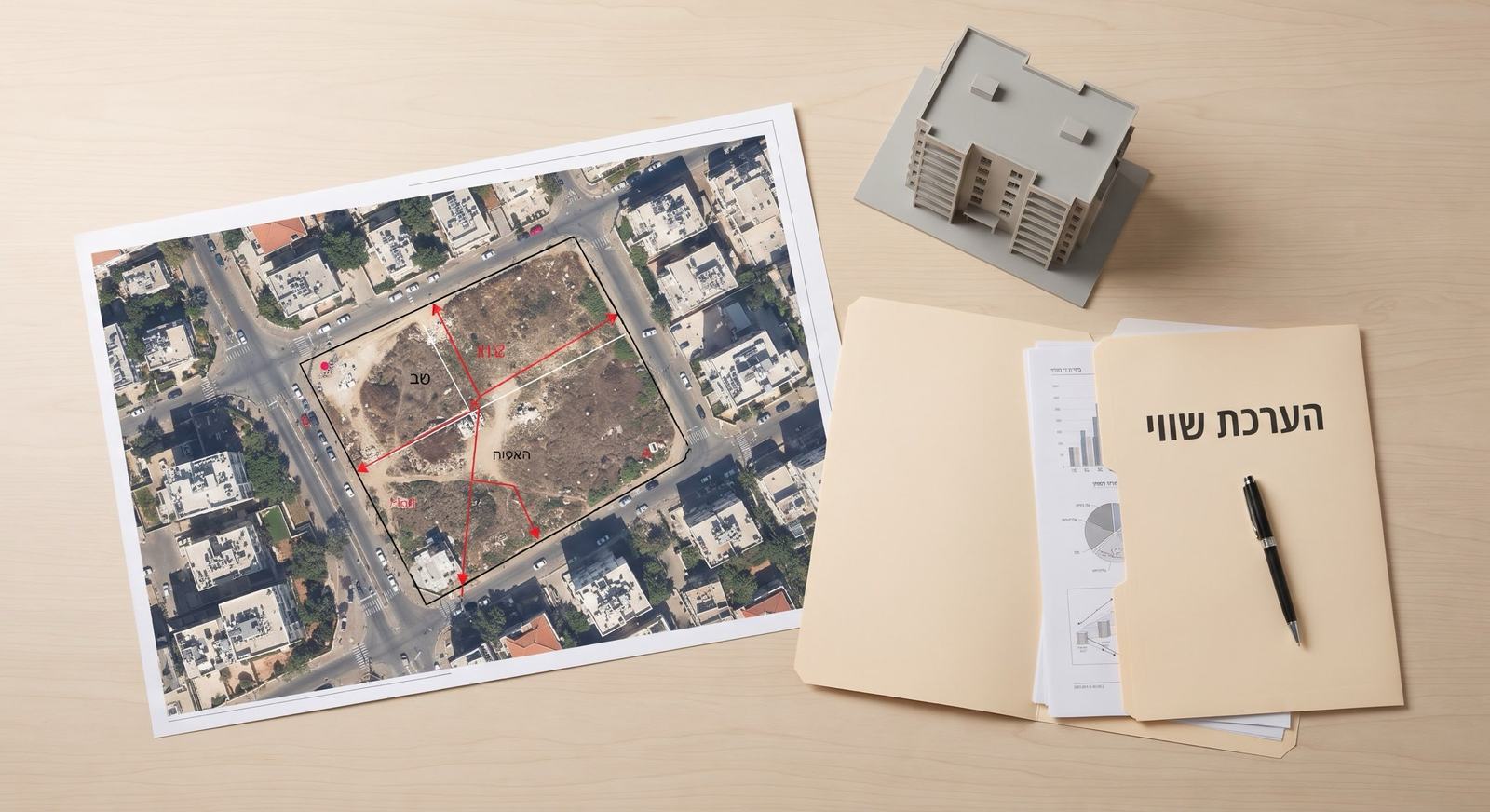
- 05What does the appraisal say? The seller must provide an appraisal under Standard 22, with a current value, a probability and an expected time frame. Compare the price with the value in the appraisal: a price below the value gives a margin.
FAQ
Why is agricultural land next to a city so expensive?
Because the buyers are paying for the expectation of a change of land designation, not for the farming. The closer the land is to an existing city and the more advanced the planning, the higher the expectation.
How much of the land goes to public needs?
Under the Planning and Building Law, expropriation of up to 40% without compensation is possible. In reparcellation plans on agricultural land, the allocations for roads, public buildings and open spaces are sometimes higher than that.
Who pays the betterment levy?
The owner, when realizing the rights: selling, receiving a building permit or starting a new use. The rate is 50% of the increase in value due to the plan.
How do you know whether the price is reasonable?
Compare with transactions in similar land, read the appraisal under Standard 22 that the seller must provide, and check whether the calculation of future value, expenses, time and probability arrives at the asking price.
Summary
The price of agricultural land is mainly the price of a forecast. To check it, start from the value of the land after approval, deduct allocations, the betterment levy and costs, and discount for time and probability. Anyone who pays a price close to the value of approved land for land without a plan is paying in advance for years of waiting and for a risk that has not yet gone down. The information in this article is general, and the calculation in it is for illustration only. It is not an appraisal, legal advice or investment advice.
Further reading and tools on the site
Articles
- Appraisal standard 22: how to read a land appraisal
- Betterment levy
- Reparcellation without the owners' consent
- Change of land designation: the 7 stages
- Risks of investing in land
Tools and pages
Sources
- 01Real Estate Appraisers Council: Standard 3.1, applying the appraisal approaches to land and agricultural land (PDF)
- 02Central Bureau of Statistics: price indices, including the residential land price index
- 03Supreme Court: CA 6407/14, expropriation without compensation of up to 40% under Section 190
- 04State Comptroller: collection of betterment levies and their use (2024, PDF)
- 05Inspiration for the calculation method: Ehud Hameiri, The Real Estate Investor's Guide (Tefer, 2020)