What land rezoning is
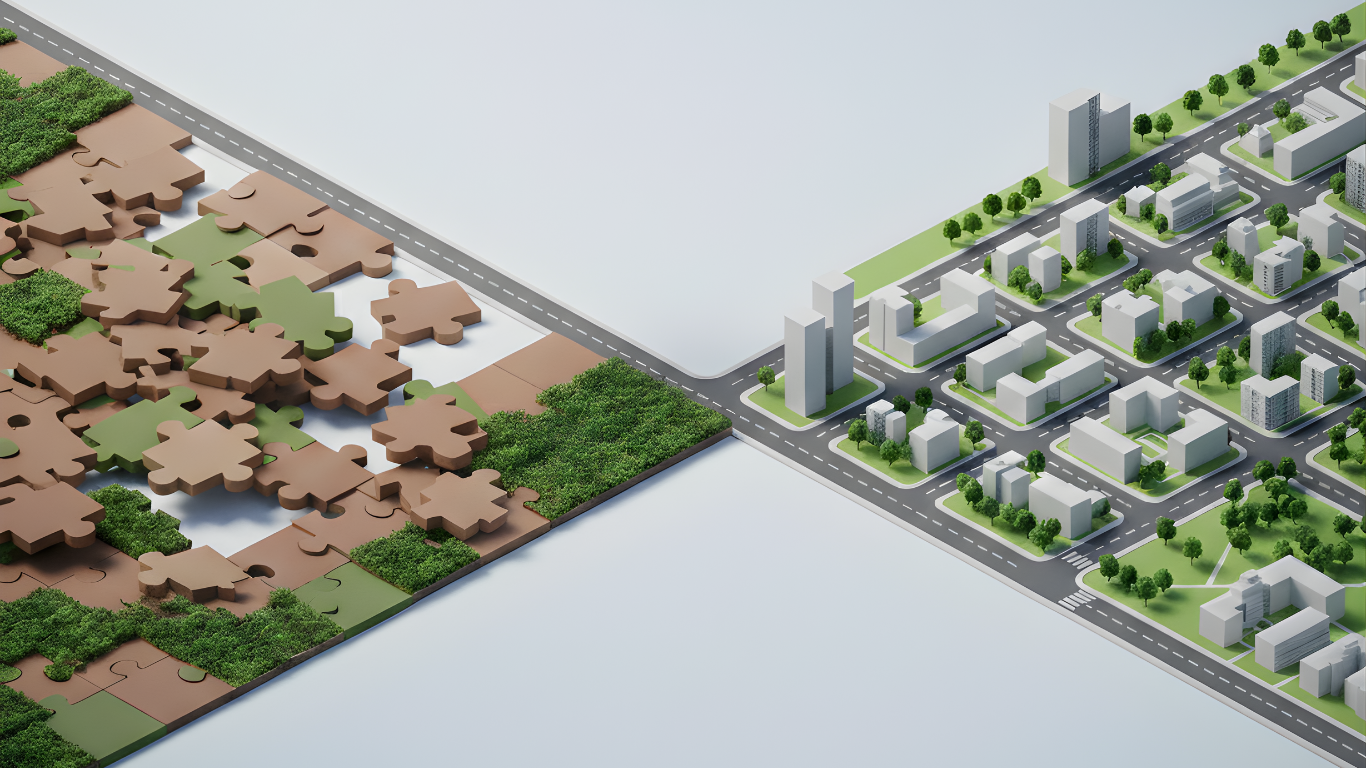
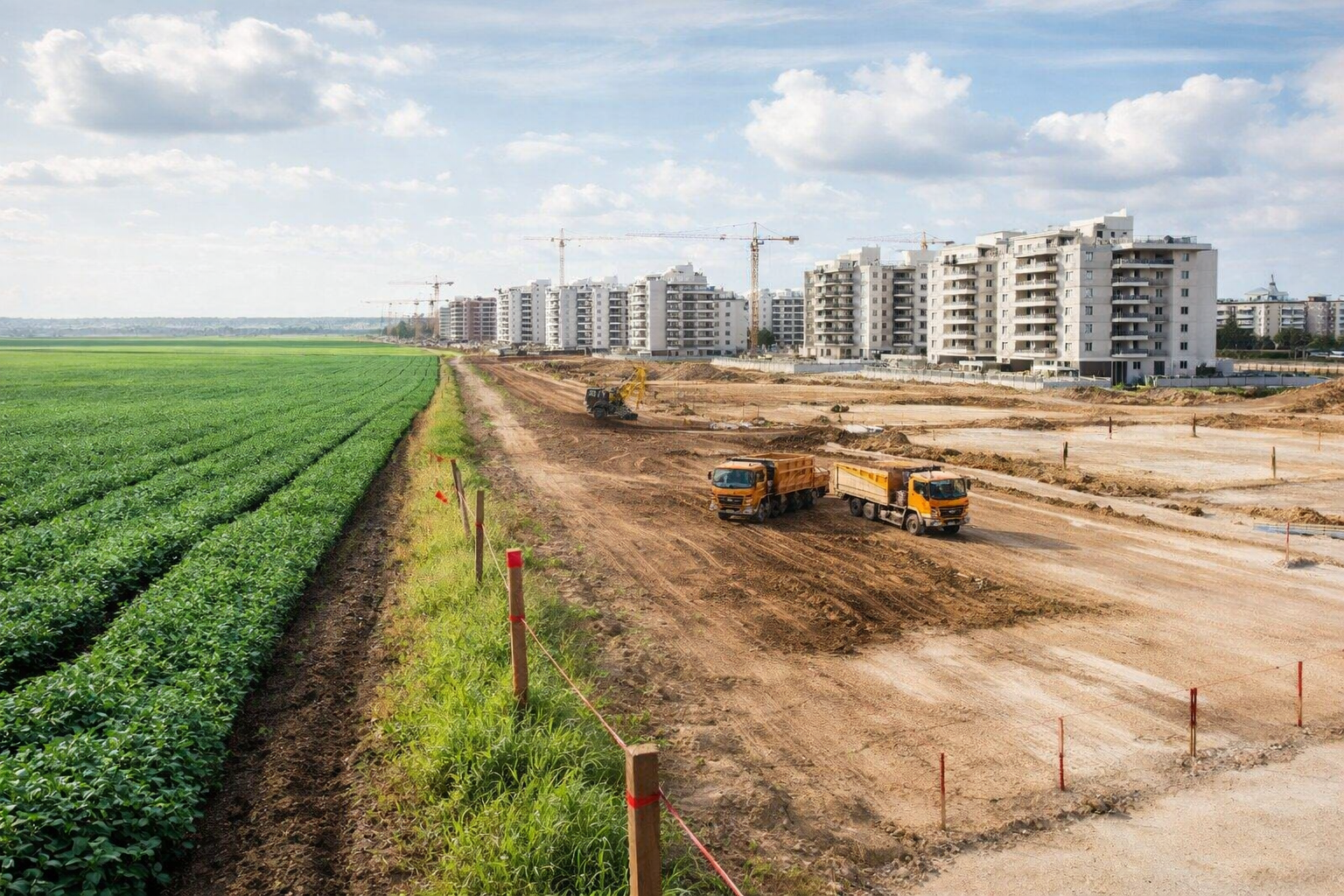
“Land rezoning” (hafshara in Hebrew, literally “unfreezing”) is the common name for a change of designated use: land marked in the plans as agricultural or open receives a use that allows building on it, such as housing, commerce or employment. The use is changed by the planning institutions, in a plan that goes through a process set in the Planning and Building Law.
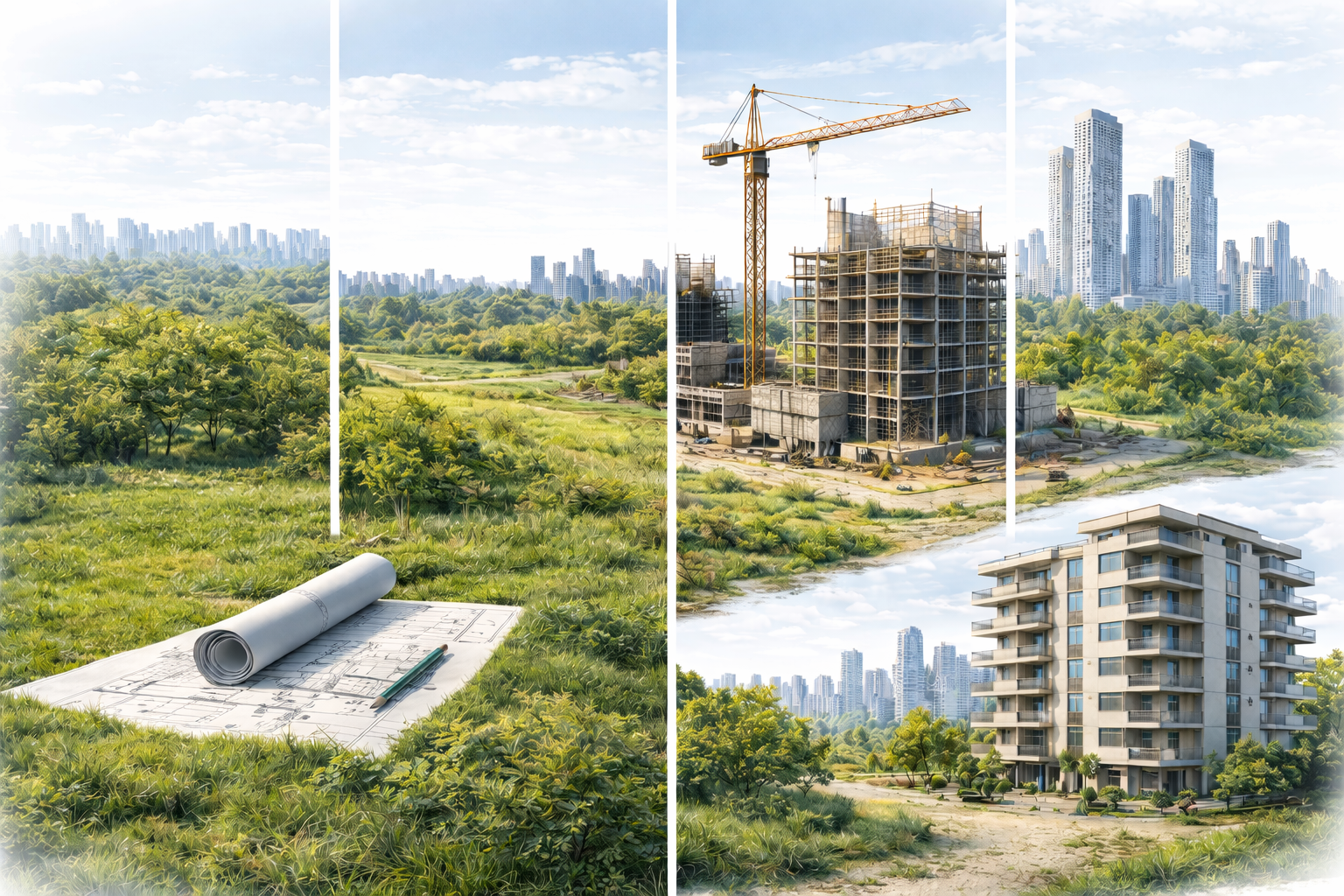
It is not a single moment. The land passes several stations, and at each one certainty rises and risk falls. Whoever buys land needs to know which station it is at today, not which station it is hoped to reach.
- 7
- stations on the way from agricultural land to an occupied building
- 60
- days to file an objection after the plan is deposited
- 50%
- of the rise in value: the betterment levy
The seven stages, in order
This is the full path. Not every piece of land passes all the stations in exactly this order, but the general order is fixed.
- 1Agricultural land
- 2Preliminary planning
- 3Comprehensive plan
- 4Detailed plan
- 5Deposit and taking effectRezoning
- 6Building permit
- 7Construction and occupancy
Stage 1: Agricultural land with no planning
The designated use in the plans in force is agricultural or open land. There are no building rights and no permit can be obtained. What exists is potential only.
What proves the stageThe plan in force that applies to the parcel, with its provisions and drawing, and planning information from the local planning committee.
Stage 2: Preliminary planning
This is where it is checked whether planning can be promoted at all: compliance with the national and district plans, infrastructure and drainage constraints, and setting the “blue line”, meaning the boundary of the compound to be planned. On private land this is also the stage at which the owners organise: a representative body, financing for the planning, and a co-ownership agreement.
What proves the stageSummaries of meetings with the authority, guidance letters, policy documents and official minutes. A verbal promise is not proof.
Stage 3: Comprehensive master plan
The plan sets where the whole town will develop: which areas are designated for development, for which uses and at what density. It raises certainty, but it does not give building rights to a particular parcel, and a building permit cannot be issued under it. That requires a detailed plan. Not every town has an approved comprehensive plan, and sometimes a detailed plan is promoted without one.
What proves the stageThe documents of the comprehensive plan and its status, and whether the compound is marked in it as an area for development.
Stage 4: Detailed plan (TABA)
This is where it is set what will actually be built: the designated use of each plot, the building rights, the roads and the public areas. In new compounds the plan often also includes reparcellation: the old parcels are merged and divided again into plots, and allocation and balancing tables set what each owner receives.
What proves the stageThe plan documents as submitted to the planning institution, and the decisions of the committee that discussed it.
Stage 5: Deposit, objections and taking effect
The planning institution decides to deposit the plan, and it is published for public review. Anyone who sees themselves as harmed can file an objection within 60 days, and the committee may extend the period. After the objections are heard, the plan is approved and takes effect. This is the moment the land is considered rezoned.
What proves the stageThe deposit decision, the publication for objections, and the notice that the plan has taken effect.
Stage 6: Building permit
Once the plan is in effect, a specific building is designed on a specific plot and a permit is requested. At this stage fees and levies are paid, including the betterment levy.
What proves the stageInformation for a permit (the information file), the permit application and the signed permit.
Stage 7: Construction and occupancy
The building is built and connected to infrastructure, and an occupancy approval (Form 4) and a completion certificate are received.
What proves the stageForm 4 and the completion certificate.
Where the risk is and where the price is
The further along the path, the lower the risk and the higher the price. The table shows the general direction. It is an estimate, not an official index.
| Stage | Level of risk | Effect on value |
|---|---|---|
| Agricultural land with no planning | Very high | Low |
| Preliminary planning | High | Low to medium |
| Comprehensive plan | Medium | Medium |
| Detailed plan in process | Medium to low | High |
| Detailed plan in effect | Low | Very high |
| Building permit | Very low | The highest |
- Without proof of the next stage, you do not pay for it.
- The big jump in value often happens around the detailed plan: at deposit and when it takes effect.
- The “cleaner” the land is in planning terms, the more expensive it is.
The information in this article is general and is not investment advice.
Private land: four points to note
On private land there is no single body that promotes the planning. The owners need to do it together.
Owners’ organisationWithout a representative body, a mechanism for financing the planning and a co-ownership agreement, it is hard to promote a plan.
ReparcellationThe value is set by the plot you receive in the allocation, not only by the location of the original parcel. More: Reparcellation without owners’ consent.
Taxes and leviesThe betterment levy is half of the rise in value created by the plan, and it is paid on realisation: on a sale or on receiving a building permit. Fees and development levies should also be taken into account.
Realisation strategyDecide in advance whether the aim is to sell as the plan advances, or to continue to construction, alone or in a combination deal.
Land advertisements sometimes use the term “right to an apartment”. How to check what it really means.
How long it takes
There is no fixed timetable. According to figures published in the name of the Bank of Israel and the Israel Builders Association, about 13 years pass on average from the start of planning to the handover of the apartments. Approval of the plan in the planning institutions is only part of that time. The rest is removing barriers, development, permits and construction.
According to Planning Administration figures published in Globes, approval of a plan in a district committee took about two years on average in 2021. These are averages. A large plan on agricultural land can take much longer, and can also stop.
There is also a fast track: large housing plans declared a preferred housing area are discussed at the VATMAL, a national committee. More on the VATMAL track.
An example from the field: three stages in Gedera
In Gedera three different stages can be seen in the same town, as of November 2026: Compound 2 is already approved, Compound 7 is at the objections stage, and Compound 8 is still being prepared at the VATMAL. The details are in Compounds 2, 7, 8 and 9 in Gedera, and the full timetable in Gedera 2015–2035.
Compound 8 is also one of our projects: Gedera West – Compound 8.
Checklist: 6 things to ask for before you buy
- 01The name of the plan in force, its number and the date it took effect, with the provisions and the drawing.
- 02The status of the comprehensive plan: approved or in process, and whether the compound is marked in it for development.
- 03The status of the detailed plan: in preparation, deposited, at objections or in effect, with the official documents.
- 04Whether there is reparcellation, and what the allocation and balancing tables say.
- 05Whether there is information for a permit, a permit application or a signed permit.
- 06On private land: who the representatives are, whether there is a co-ownership agreement, and how the planning is financed.
You can check the status of a plan yourself on the Planning Administration’s planning information site, by plan number or by block and parcel.
Frequently asked questions
What is land rezoning?
Changing the designated use of agricultural or open land to a use that allows building. The change is made in a plan approved by the planning institutions.
When is land considered rezoned?
When a detailed plan that applies to it takes effect. A comprehensive plan, or a decision to deposit a plan, is not yet rezoning.
How long does land rezoning take?
There is no fixed time. According to figures published in the name of the Bank of Israel, about 13 years pass on average from the start of planning to the handover of the apartments, and a plan can also be delayed or stop.
What is the difference between a comprehensive plan and a detailed plan?
A comprehensive plan sets the direction of development for the whole town. A detailed plan sets building rights for plots, and only under it can a building permit be issued.
Who pays the betterment levy, and how much?
The landowner. The levy is half of the rise in value created by the approval of the plan, and it is paid on realisation: a sale or receiving a building permit. There are cases of exemption or of a different rate.
How do you check what stage the land is at?
Ask for the plan number and check its status on the Planning Administration’s planning information site. If there is no official document proving a stage, treat the land according to the previous stage.
Summary
Land rezoning is a path of seven stations, and each station has a document that proves it. The right price depends on the station the land is at today. Before buying, check the stage, ask for the proof, and price by what already exists.
Further reading and tools
Articles
- A guide to buying land for investment
- Land or an apartment: which is the better investment?
- Population density and real estate prices
- VATMAL: the fast track for planning new neighbourhoods
Pages
Sources
- 01Planning and Building Law, 5725-1965, and its Third Schedule (betterment levy)
- 02Planning Administration: filing an objection to a plan (Hebrew)
- 03Kol-Zchut: filing an objection to a building plan (Hebrew)
- 04Kol-Zchut: calculating the betterment levy (Hebrew)
- 05Tel Aviv-Yafo Municipality: what a comprehensive master plan is (Hebrew)
- 06Ynet: about 13 years from planning to handing over the key (Hebrew)
- 07Globes: the average time to approve a plan, according to the Planning Administration yearbook (Hebrew)