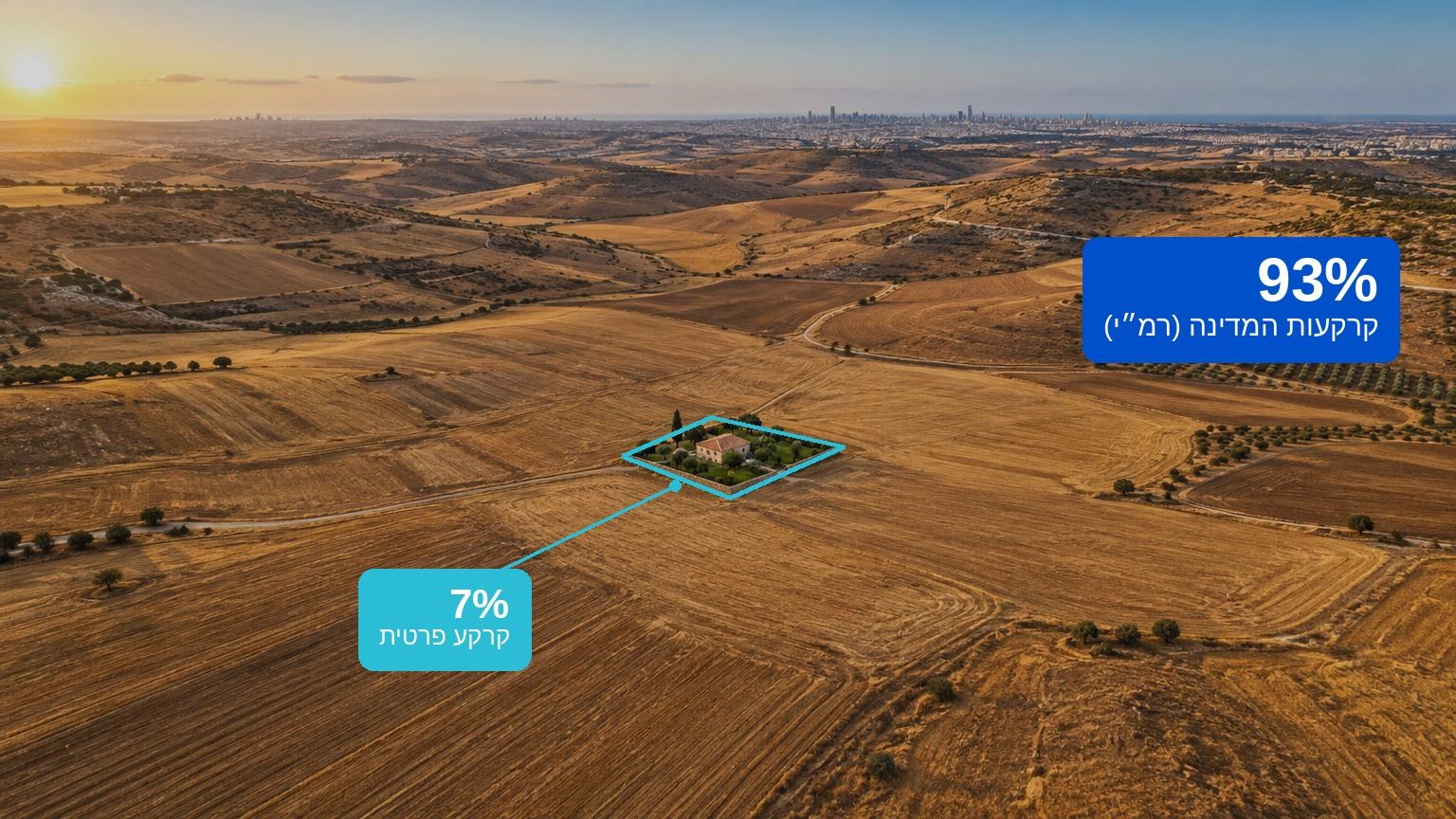
- 93%
- of the land: Israel Lands, managed by the ILA
- 7%
- only, privately owned
- 3
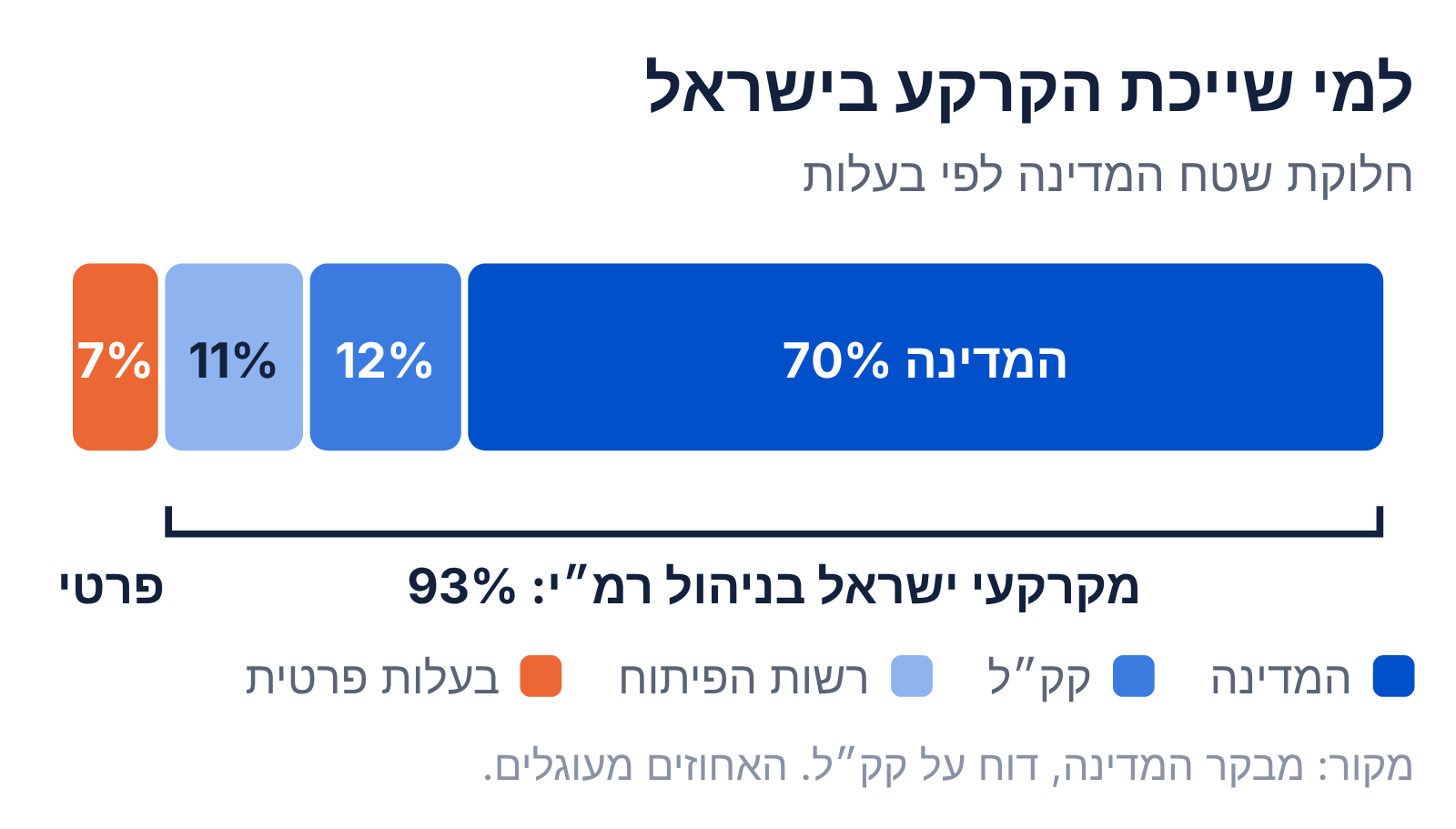
- owners of Israel Lands: the state, KKL-JNF and the Development Authority
Who Owns the Land in Israel
Israel Lands are the lands of the state, the Development Authority and Keren Kayemeth LeIsrael (KKL-JNF). The Israel Land Authority (ILA) manages them: it plans, develops and markets them. Only about 7% of the area, about 1,500 km², is open to private ownership. On the rest, you can usually only get a lease.
Ownership or Lease
- Private ownership
- The land is yours. You can sell it, bequeath it and mortgage it, and it is registered in the Land Registry (Tabu) without ILA approval. When the land's designation changes, the increase in value is yours, and you pay a betterment levy to the local authority.
- ILA lease
- A right to use the land for the period and purpose set out in the contract, while ownership remains with the state, KKL-JNF or the Development Authority. Transferring rights usually requires the ILA's consent.
- ILA agricultural land
- Leased to farmers, moshavim and kibbutzim for agricultural cultivation. The contract is intended for agricultural cultivation.
What Happens When ILA Agricultural Land Changes Designation
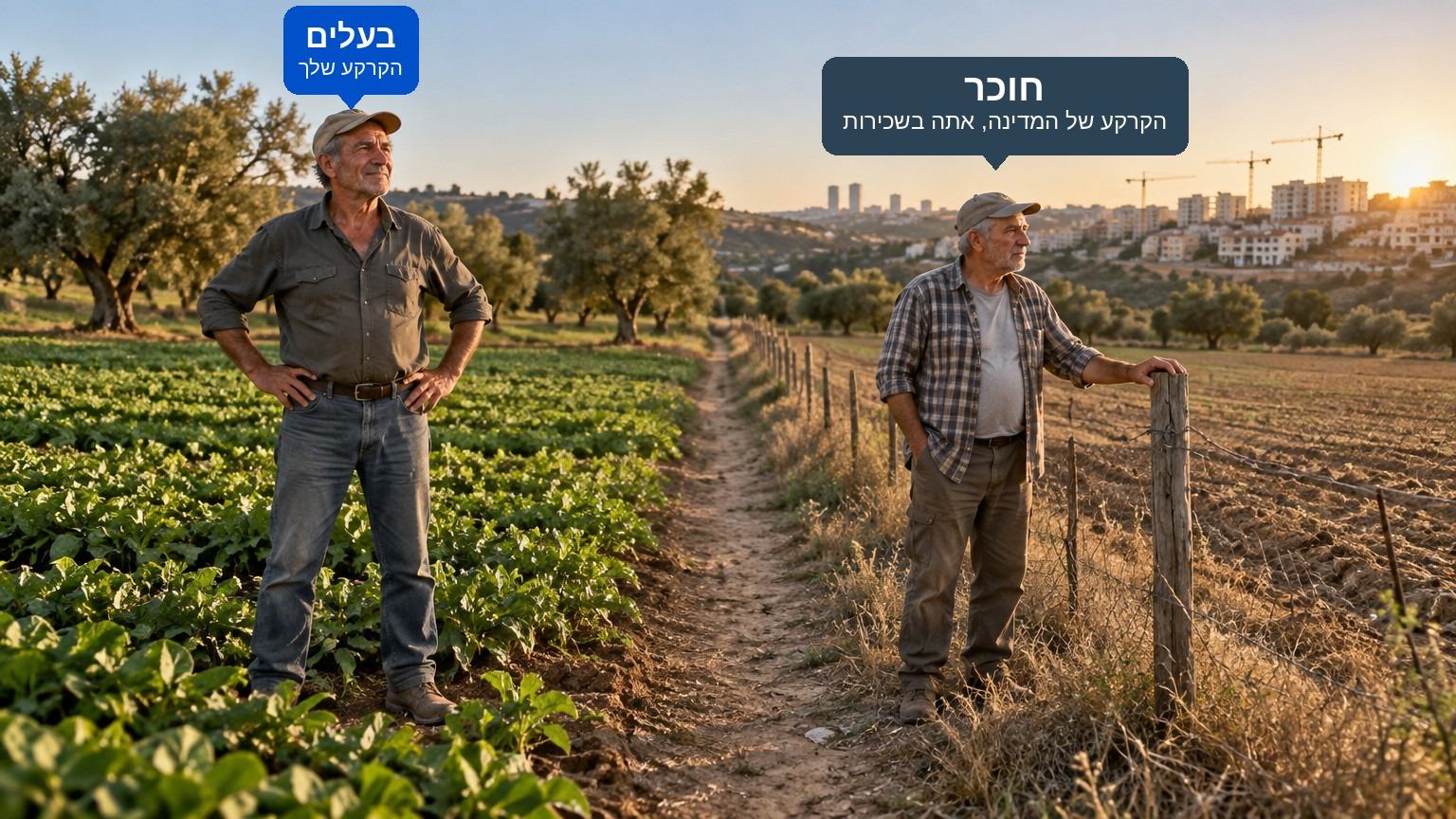
Under Decision 1 of the Israel Land Council, when the designation of agricultural land changes, the lease agreement ends and the land returns to the ILA. The lessee receives compensation for their investments in the land and for the right taken from them. Today there are several compensation tracks, under Council Decision 1470, and lessees who have received notice that the land is being reclaimed file a compensation claim with the ILA.
What this means for investors: on ILA agricultural land, the increase in value from the change of designation goes mainly to the state, and the lessee receives compensation. On private land, the increase in value stays with the owners, after the betterment levy. About the levy: Betterment levy.
How to Check Who Owns a Parcel
Land Registry extractThe owner field in the Land Registry extract (nesach tabu) shows who the owner is. "State of Israel", "Development Authority" or "Keren Kayemeth LeIsrael" means it is ILA land. Names of individuals or companies mean it is private land.
Registered leaseIf there is a lease, it appears in the extract. If the rights were not registered in the Land Registry, you request a confirmation of rights from the ILA.
Warning noteThe ILA does not allow warning notes (he'arat azhara) to be registered on rights that were not registered in the Land Registry. This matters before you pay.
Mixed parcelSome parcels are partly state-owned and partly private. Check the extract for each owner's share.
How to read the extract: Land Registry extract. And what a warning note gives you: Warning note on land.
Checklist: Before Buying Agricultural Land
- 01Get an up-to-date Land Registry extract. Who are the owners, what are the shares, and is there a registered lease?
- 02Check the parcel in ERRA Analytics. Look up the block and parcel (gush and helka), see which plans apply to it and their status, and compare with transactions in the area.
- 03ILA land? If so, understand that it's a lease, and what will happen to it when the designation changes.
- 04What exactly are you buying? Ownership of a share of the land, a leasehold right, or a contractual right only.
- 05Can the right be registered? A warning note (he'arat azhara) at the Land Registry (Tabu), or registration with the Israel Land Authority (ILA).
- 06Consult a lawyer. Before you pay.
FAQ
How much of the land in Israel is private?
About 7%. About 93% is Israel Lands, belonging to the State, the Jewish National Fund (KKL-JNF) and the Development Authority, and managed by the Israel Land Authority (ILA).
What is the difference between ownership and leasehold?
With ownership, the land is yours. With a lease, you have the right to use the land for a set period and a specific purpose, while ownership remains with the State, KKL-JNF or the Development Authority.
What does a lessee of agricultural land receive when the land designation is changed?
Under Decision 1, the lease ends, the land returns to the Israel Land Authority (ILA), and the lessee receives compensation for the investments made and for the right that was taken away.
How can you tell whether land belongs to the ILA?
From the Land Registry extract (nesach tabu). If the owners are the State of Israel, the Development Authority or the Jewish National Fund (Keren Kayemeth LeIsrael), it is Israel Land Authority (ILA) land.
Can a warning note be registered on ILA land?
Only on rights that have been registered at the Land Registry (Tabu). For rights that have not been registered, the Israel Land Authority (ILA) does not allow a warning note (he'arat azhara).
Summary
Most of the land in Israel is Israel Lands, managed by the Israel Land Authority (ILA), and only about 7% is private. On private land, the increase in value from a change of land designation stays with the owners; on agricultural land belonging to the ILA, the lease ends and the lessee receives compensation. That is why, before any purchase, you check the Land Registry extract (nesach tabu) to see who the owners are and what exactly you are buying. The information in this article is general and does not constitute legal advice or investment advice.
Further reading and tools on the site
Articles
- Land Registry extract (nesach tabu)
- Warning note (he'arat azhara) on land
- Betterment levy
- Balancing and allocation table
- Guide to buying land
Tools and pages
Sources
- 01State Comptroller: 93% Israel Lands, 70% State, 11% Development Authority, 12% KKL-JNF (PDF)
- 02Mishpatim (Hebrew University): about 7% privately owned, about 1,500 km² (PDF)
- 03Globes: Decision 1, termination of the lease and compensation for the lessee upon change of land designation
- 04ILA: Agricultural land redemption procedure, compensation tracks under Decision 1470 (PDF)
- 05gov.il: Claiming compensation following the return of agricultural land
- 06gov.il: Registering rights with the ILA, warning notes
- 07gov.il: Request for confirmation of rights from the ILA