- 7
- Main risks to check
- 4,928
- Agricultural land transactions in 2021
- 7
- Minimum days between receiving the appraisal standard 22 report and signing
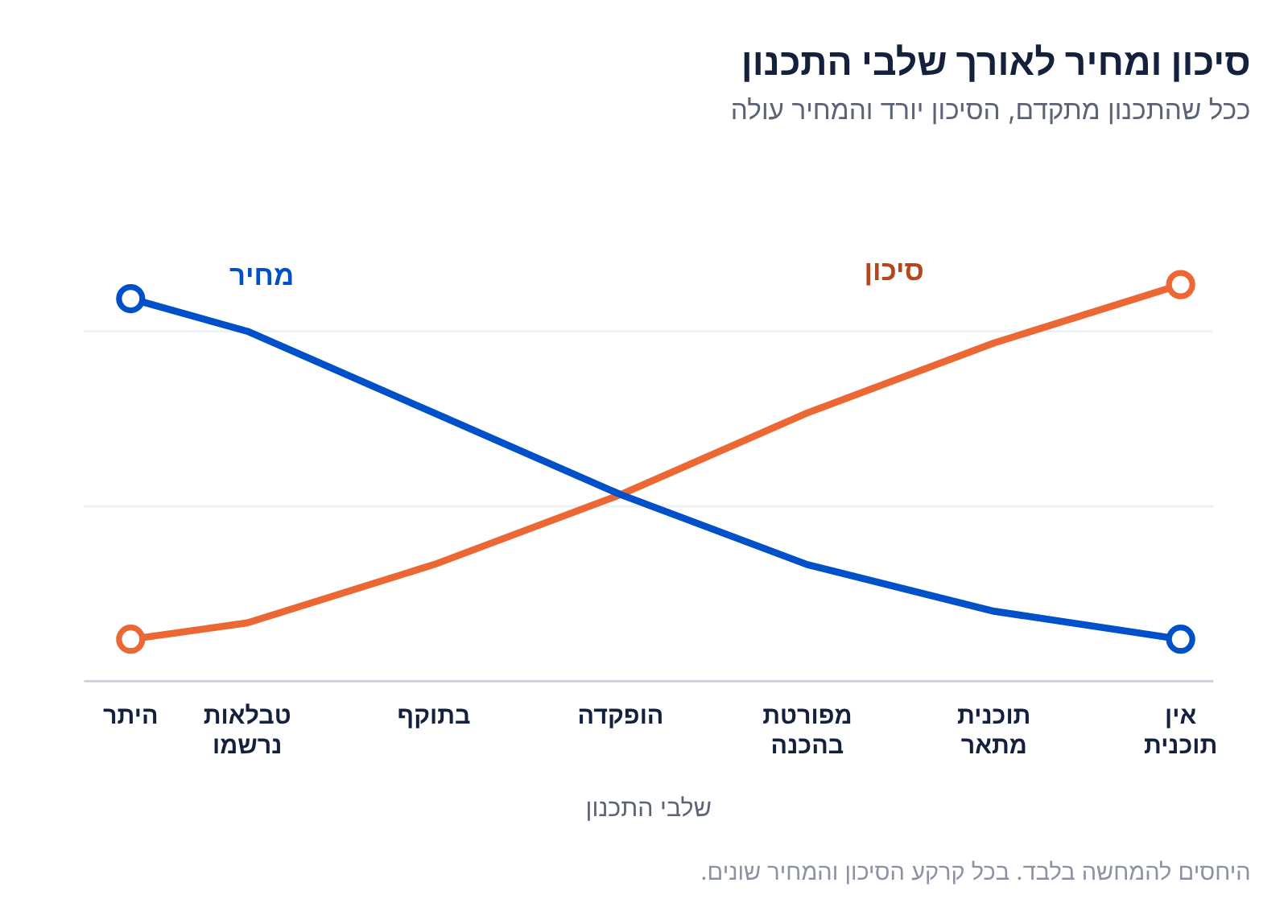
Risk and price move in opposite directions
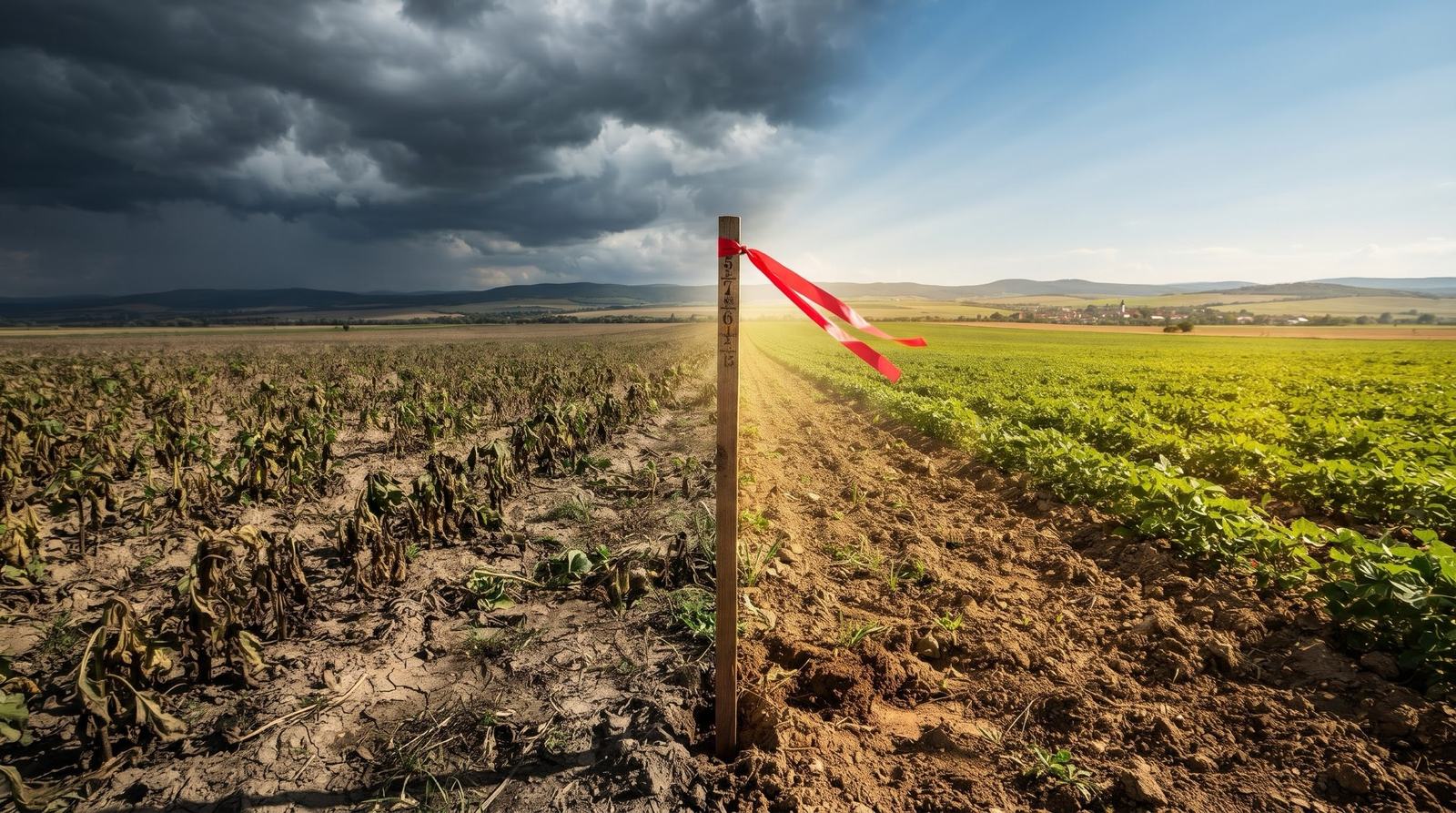
Early on, when there is no plan, the land is cheap and the risk is high. As planning advances, the risk goes down, but the price goes up. There is no "right" stage for everyone. The question is whether the price you are paying matches the stage the plan has actually reached.
The seven risks, and how to reduce each one
| Risk | What can happen | How to reduce it |
|---|---|---|
| Planning | The plan is not approved, is rejected or is changed. | Check the plan and its stage in ERRA Analytics and on the Planning Administration website. |
| Time | Approval takes many more years than you expected. | Check the estimated timeline in the appraisal standard 22 report, and invest only money that can wait. |
| Unification and division | The plot you receive is small or in a different location. | Read the allocation tables when they are published, and check the designation on the plan map. |
| Costs | Betterment levy (hetel hashbacha), taxes and development costs reduce the profit. | Calculate all the costs in advance, not just the purchase price. |
| Liquidity | It is hard to sell a share in the land before the plan is approved. | Plan to hold until the end, and check in the agreement how you can sell. |
| Co-owners | Disputes between owners of jointly owned land. | Check whether there is a co-ownership agreement, and what it says about decisions and selling. |
| Missing information | Deciding based on what was said verbally, without documents. | Ask for an appraisal standard 22 report, pull a Land Registry extract, and check every claim yourself. |
A real case: 12 years and back to square one
11 buyers from six families jointly bought 3,250 m² of agricultural land in Pardes Hanna-Karkur in 2014 and 2015, after seeing newspaper ads. The agreement promised that a warning note (he'arat azhara) would be registered in their favor within three days. After 12 years and lengthy legal proceedings, the land is still agricultural, and the best outcome they achieved was getting their money back.
In one sentenceA verbal promise is no substitute for a document. Everything you are told about a plan, its stage and the price can, and should, be checked yourself.
Independent checks before you sign
- 01Open the parcel in ERRA Analytics. By block and parcel: see the plans that apply to it, their status and the designation.
- 02Check prices. In ERRA Analytics, you can see what parcels in the same block and the surrounding area sold for. Compare that with the price you're being asked.
- 03Verify the plan. On the Planning Administration (Minhal HaTichnun) website: the blue line, the stage and the latest decision.
- 04Get an appraisal standard 22 report. At least 7 days before signing. Check both values, the estimated timeline and the costs.
- 05Pull a Land Registry extract (nesach tabu). Check who the seller is: the registered owner, or the holder of a warning note (he'arat azhara) who bought and paid and is waiting for ownership to be registered in their name. And check what is registered against their share.
- 06Check the co-ownership agreement (heskem shituf). If there is one, read it. If there isn't, ask how decisions will be made.
- 07Calculate the costs. Betterment levy (hetel hashbacha), real-estate capital gains tax (mas shevach), purchase tax (mas rechisha), legal fees and development.
- 08Your own lawyer. who represents you and arranges registration of a warning note immediately after signing.
A full explanation of each check: How to check land and a plan yourself, appraisal standard 22, Land Registry extract and co-ownership agreement.
FAQ
What is the biggest risk with agricultural land?
That the plan won't be approved, or will be approved many more years later than you expected. Your money stays tied up during that time.
Is land with an approved plan risk-free?
The risk is lower, but there are still risks: the size and location of the plot in the allocation table, costs, co-owners, and the time until construction.
How do I know whether the price is fair?
Compare it with the two values in the appraisal standard 22 report and with transactions in the area, for example in ERRA Analytics. The closer the price is to the future value, the less profit is left.
Can I sell land before the plan is approved?
Yes, but not always quickly and not always at the price you wanted. That's why you should invest in land only money that can wait.
What should I do if the marketer doesn't provide an appraisal standard 22 report?
Don't sign. A business selling land that is not available for construction must provide it, in writing and free of charge, at least 7 days before signing.
Summary
Investing in land is a long-term investment, with planning risk, timing risk and costs that need to be calculated in advance. Most of the risks can be identified before signing: check the parcel, the plan and the prices in ERRA Analytics, verify with the Planning Administration, read the appraisal, the extract and the agreement, and invest only money that can wait. The information in this article is general and does not constitute investment advice or legal advice.
Further reading and tools on the site
Articles
- How to check land and plans yourself
- Appraisal standard 22: how to read an appraisal
- Betterment levy
- Guide to buying land for investment
- Apartment or land: what to invest in
Tools and pages
Sources
- 01Consumer Protection Regulations (Duty to Disclose Details in the Sale of Land Not Available for Construction)