- 5
- stages, from getting acquainted to realization
- 7 days
- At least, between delivery of the Standard 22 appraisal and signing
- 2
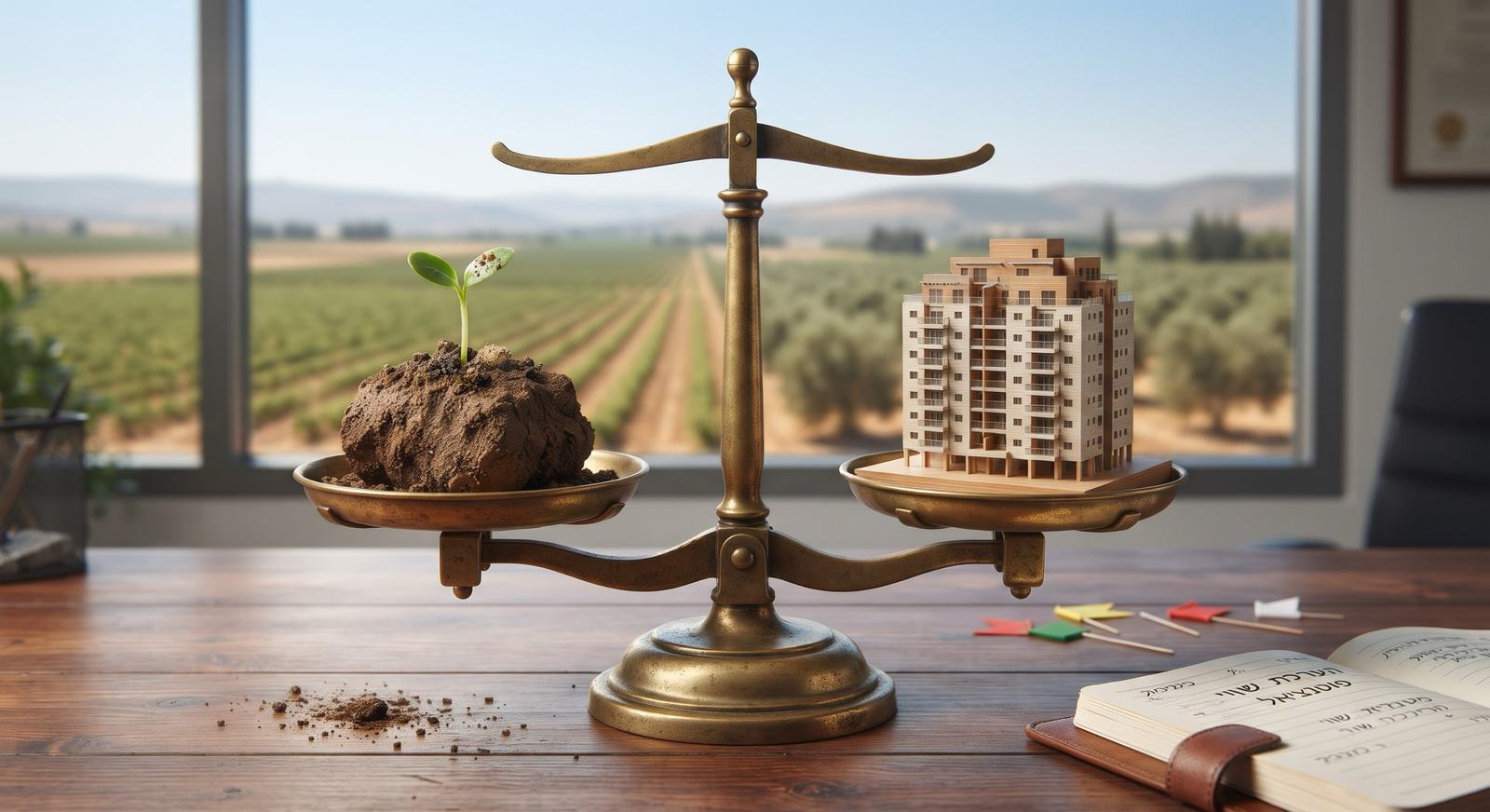
- values in every appraisal: today, and if the plan is approved
The five stages
- 1Getting to know the investor and building a personal profile
A face-to-face introductory meeting: to understand who you are, not just what your budget is. We map your needs, your financial goals and the level of risk you are comfortable with, and the investment is built around that profile.
- 2Choosing a personalized investment
We match an investment from the available opportunities to the needs and goals that were defined. You receive a full explanation of the risks, the expected return and the options for realization, and we build a track with timelines and exit points.
- 3Closing the deal and registration
Guidance through signing the purchase agreement. Payment for the deal goes through a lawyer's trust account, and we handle the registration in the Land Registry (Tabu) and the coordination among all the parties involved.
- 4Ongoing guidance and orderly reports
Tracking of the investment's status and updates as needed. We report every material change, with full transparency.
- 5Realization and an orderly exit
You choose whether to use our guidance at the exit stage. The realization is planned in advance, around several exit points.
What to check before you sign
In every project the process includes an appraisal, legal checks, a full explanation of the planning and the stages, guidance by lawyers and registration in the Land Registry (Tabu). These are the documents worth having in hand before signing:
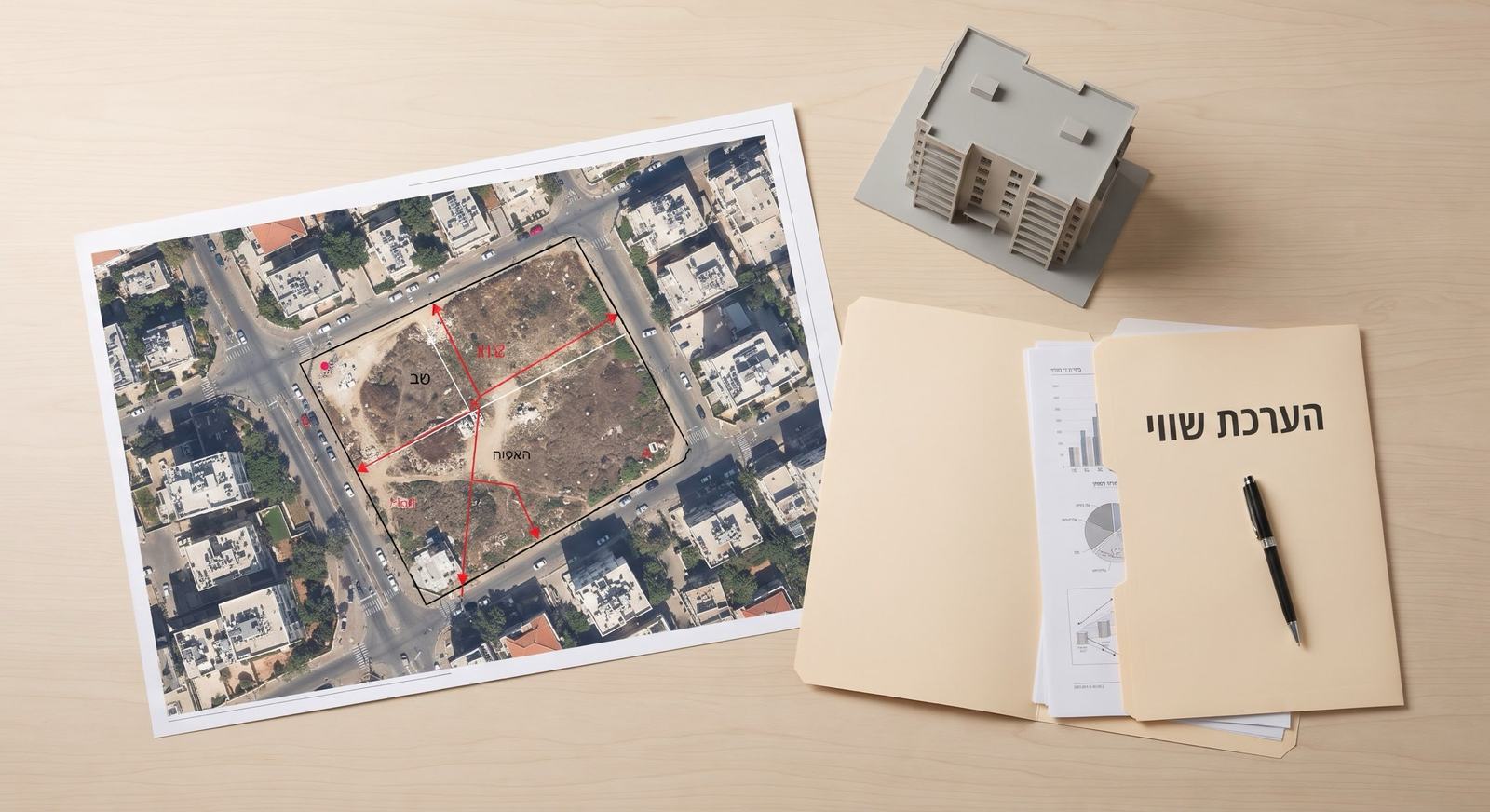
Standard 22 appraisalA dealer selling land that is not available for construction gives the buyer a written appraisal, free of charge, at least 7 days before signing. The appraisal contains two values: today, and if the plan is approved. Details: Standard 22.
Block, parcel and plan numberWith these three numbers you check the plan and its stage yourself. Details: How to check land and plans yourself.
An up-to-date Land Registry extractWho the owners are, how large the share being sold is, and what is registered on it. Details: Land Registry extract.
The contract and the co-ownership agreementOn jointly owned land you also sign a co-ownership agreement. Read both before signing, not after.
The money: a trust account
Payment for the deal goes through a lawyer's trust account. The conditions for transferring the money are set in the purchase agreement, and it is worth reading them before signing.
The registration: a warning note, and then ownership
When private land is purchased, the buyer receives a warning note (he'arat azhara) right after signing, and the ownership is registered in the Land Registry (Tabu) in the buyer's name once the tax clearances are received. The warning note is the first registration that protects the buyer: as long as it is registered, no transaction that contradicts it will be registered.
What depends on us, and what does not
Investing in land before a change of designation is a long-term investment, with risk. It matters to us that you know in advance what does not depend on any marketer:
- Approval of the plan: plans are approved by the planning institutions. A plan can be delayed, changed or not approved.
- Time: there is no target date. The money is invested for many years, with no current income.
- The future value: the second value in a Standard 22 appraisal is a value on the assumption that the plan is approved. It is not a promise.
What does depend on us: a full explanation of the risks before the decision, orderly documents, and a report on every material change. On all the risks and how to reduce them: Investing in agricultural land: the complete guide.
Checklist: check us yourself
- 01Open the parcel in ERRA Analytics By block and parcel: you see the plans that apply to it, the status and the designation, and the transactions nearby.
- 02Verify the plan On the Planning Administration (Minhal HaTichnun) website: the blue line, the stage and the latest decision.
- 03Read the Standard 22 appraisal The two values, the estimated time and the assumptions.
- 04Get a Land Registry extract (nesach tabu) Check who the seller is and what is registered on the seller's share.
- 05Read the contract and the co-ownership agreement Before signing, with a lawyer of your own if you wish.
- 06Check the extract afterwards as well And see that the warning note was registered in your favor, on the whole area you bought.
FAQ
Where does the money go when you buy?
Payment for the deal goes through a lawyer's trust account.
When is the land registered in my name?
A warning note is registered close to signing, and the ownership is registered in the Land Registry (Tabu) after the tax clearances are received.
Does ERRA promise that the plan will be approved?
No. Plans are approved by the planning institutions, and a plan can be delayed, changed or not approved. That is why you receive a full explanation of the risks before the decision.
Can I check the land on my own before the meeting?
Yes. With the block, parcel and plan number you check the parcel in ERRA Analytics and on the Planning Administration website, free of charge.
What happens after the purchase?
Ongoing tracking of the investment's status, updates as needed, and a report on every material change.
How do you exit the investment?
The realization is planned in advance, around several exit points, and you choose whether to use our guidance at that stage. Selling a share in land before the plan is approved is possible, but not always quickly and not always at the price you wanted.
Summary
Five stages: getting acquainted, choosing, signing and registration, guidance and realization. The money goes through a lawyer's trust account, the rights are registered in the Land Registry (Tabu), and everything you were told can be checked in the documents and in the open databases. The information on this page is general and is not investment advice or legal advice. The binding terms in every deal are those in the contract.
Further reading and tools on the site
The complete guides
- Investing in agricultural land: the complete guide
- Checking land before you buy: the complete guide
- Change of land designation: the complete guide
- How much is land worth: the complete guide
- Land taxation in Israel: the complete guide
Tools and pages
Sources
- 01Ministry of Justice: The Real Estate Appraisers Council approved Standard 22
- 02Consumer Protection Regulations (Duty to Disclose Details in the Sale of Land Not Available for Construction), 2016
- 03Ministry of Justice: Application to register or cancel a warning note
- 04Ministry of Justice: Obtaining a Land Registry extract from the land registers
- 05gov.il: Find plans, meetings and appeals