- 18 ₪
- Approximately, for an online Land Registry extract on the government site
- 7 days
- At least, between delivery of the Standard 22 appraisal and signing
- 7%
- Approximately, of the area of Israel is privately owned
- 5
- Extract sections to check before a transaction
The six checks at a glance
| The check | Where to check | What to look for |
|---|---|---|
| Ownership and registration | An up-to-date Land Registry extract | Who the seller is, how much they hold and what is registered on their share |
| Type of land | The Land Registry extract, and if needed a confirmation of rights from RMI | Private ownership or a lease |
| The buyer's protection | A new extract after signing | A warning note in your favor, on the whole area you bought |
| The co-owners | The Land Registry extract and the co-ownership agreement | How many co-owners, how decisions are made and what happens when a co-owner wants to leave |
| The land itself | A visit to the site | Who actually holds the land |
| Planning and value | ERRA Analytics, the Planning Administration site and the Standard 22 appraisal | Which plan applies, what stage it is at, and what the value is today |
The Land Registry extract: who the owners are and what is registered
The Land Registry extract (nesach tabu) is the official document that shows who owns the land and what is registered on it. Anyone can order it through the government service, on the site whose address ends in gov.il. For most deals a full regular extract is enough, and a historical extract also shows entries that were deleted.
Description of the propertyBlock, parcel and the registered area of the parcel. Check that the block and parcel are the same as in the contract and on the plan map.
OwnershipWho the owners are, with what share, and how they received the right: sale, inheritance or gift. In jointly owned land each owner appears with their share.
MortgagesA lien in favor of a bank or a lender. If there is a mortgage, the contract sets how and when it will be paid off and deleted.
NotesA warning note, an attachment or a court order. Check that there is no attachment on the share you are buying.
EasementsThe right of another person to use the land for a specific purpose, for example passage to a neighboring parcel.
In jointly owned land, the fraction in the extract is a share of the whole parcel, not a marked plot. What you actually receive will be determined only in the plan, in the allocation table. The full article: The Land Registry extract: how to read it.
Private land or RMI land
About 93% of the country's area is Israel Lands, managed by the Israel Land Authority (RMI), and only about 7% is privately owned. The difference matters to an investor: in private ownership, when the land changes designation, the rise in value belongs to the owners. In a lease of agricultural land from RMI, the contract is intended for agricultural cultivation.
- How to tell: from the Land Registry extract. If the owners are the State of Israel, the Development Authority or the Jewish National Fund (Keren Kayemeth LeIsrael), it is RMI land. Names of people or companies mean it is private land.
- What you are buying: ownership of a share of the land, a leasehold right, or a contractual right only.
- Can the right be registered? A warning note in the Land Registry, or registration at RMI. RMI does not allow warning notes to be registered on rights that were not registered in the Land Registry.
The full article: Private land or RMI land.
Warning note: register before you pay
A warning note is the first registration that protects whoever buys land, even before ownership passes into their name. As long as it is registered, no transaction that contradicts it will be registered, except with your consent or by a court order. It protects against a double sale and against a later attachment, and it does not expire with time.
- 1Sign a written contract
The note is registered on the basis of a written commitment by whoever is registered in the Land Registry as the owner, or as the holder of another right in the land.
- 2File a registration request
On the Land Registrar's form, with a fee and an up-to-date extract. A lawyer certifies the signatures.
- 3The money in trust
The note is registered right after signing, and the money is held in trust by a lawyer until it is registered.
- 4Get a new extract
And check that the note was registered in your favor, on the correct share and on the whole area you bought.
Buying a share in land: musha, a co-ownership agreement and dissolution
Someone who buys a share in a parcel does not receive an area of their own. They are a co-owner of the whole parcel, together with all the other owners. The co-ownership agreement sets how the co-owners make decisions, who finances the planning, and what happens when a co-owner wants to leave.
- Without an agreement
- The law sets the rules: ordinary decisions by a majority of the shares, expenses by the shares, and any co-owner may demand dissolution at any time, even the owner of a small share.
- An agreement registered in the Land Registry
- Also binds whoever buys a share in the future. An agreement that defines a common goal, for example promoting the planning, gives the court a reason to take it into account.
- What to check in the agreement
- Representation, decision-making, financing of the planning, sale of a share and the right of first refusal, dissolution and exit, and dispute resolution.
- Dissolution of co-ownership
- When the land cannot be divided, the usual way is to sell all of it and divide the money by the shares. The further the plan advances, the more reason there is to wait together.
The full articles: Co-ownership agreement in real estate and Dissolving co-ownership of real estate.
Who holds the land
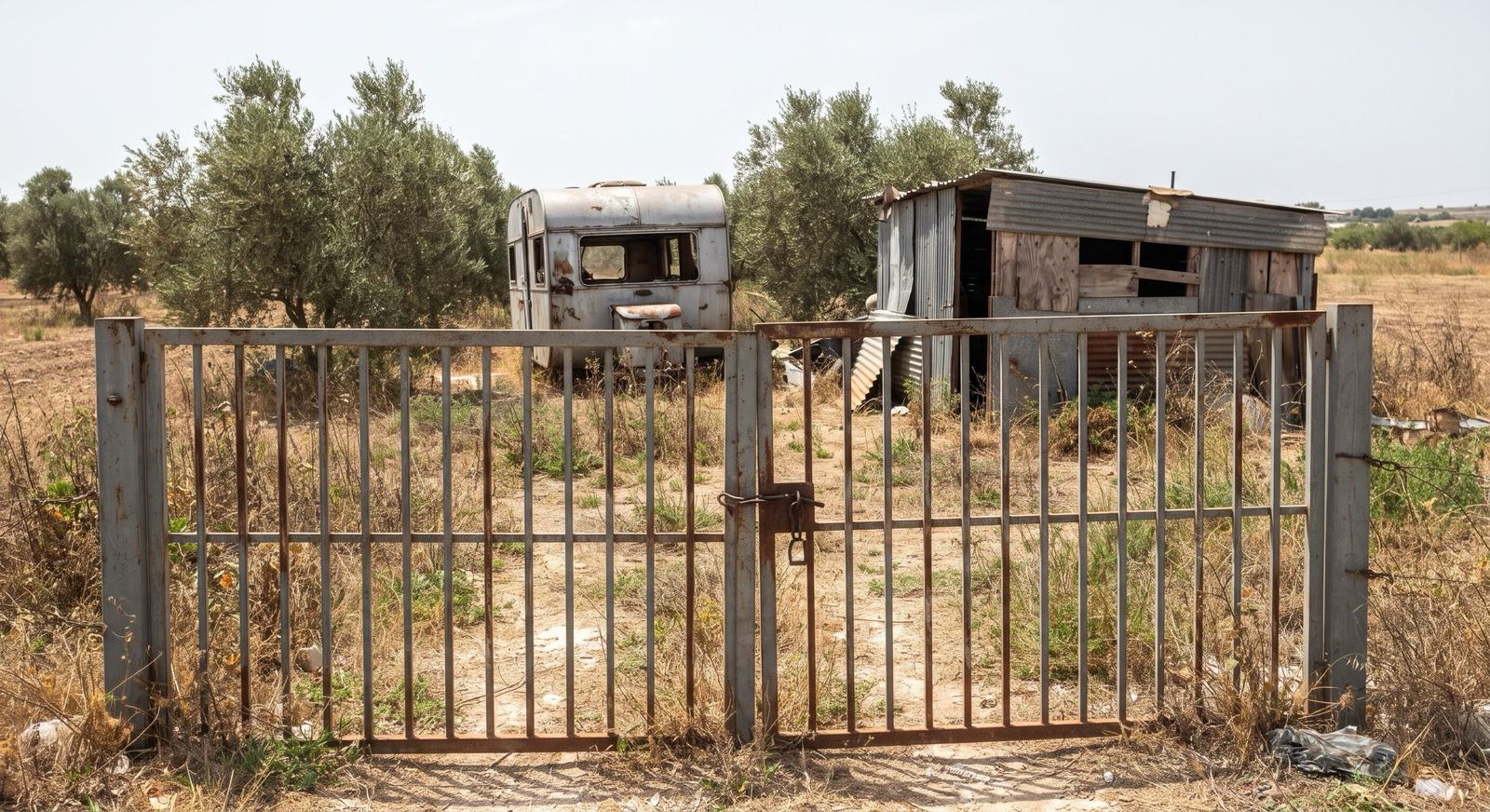
A clean extract does not mean the land is vacant. Before buying, visit the site and check who cultivates the land or holds it. Someone who lawfully holds land can remove a trespasser on their own only within 30 days of the trespass, and after that a court is needed. In settled land, long possession does not override registration, but eviction takes time and money. If there is an occupant, the price should reflect that, and the contract should set who is responsible for the eviction. The full article: Trespassers and occupants on land.
The appraisal: Standard 22 and the “right to an apartment”
A dealer who sells land that is not available for building must give the buyer an appraisal under Standard 22, in writing and free of charge, at least 7 days before signing. The appraisal has two values: what the land is worth today, and what it will be worth if the plan is approved.
- The second value is not a promise: it is a value on the assumption that the plan will be approved. It does not say whether it will be approved, when, or on what scale.
- The appraisal against the plan: the appraisal should describe the same planning status that you see on the Planning Administration site.
- “Right to an apartment”: this is a marketing name for a share in land expected to be enough for an apartment, and not a legal term. You are buying a share in land, not an apartment. The final number is set in the allocation table.
The full articles: Standard 22 and Right to an apartment.
The type of deal determines what to check
- Sale
- You buy ownership of a share of the land. Check the extract, the warning note and the co-ownership agreement.
- Option
- A right to buy, with no obligation. The landowner is bound, the option holder is not. Check the option fee, the exercise price and the period. Details: An option to buy land.
- Purchase group
- Several people buy land together. Check what is registered in your name in the extract, and what the co-ownership agreement sets. Details: Purchase group.
- Combination deal
- The landowner receives apartments instead of money, and the consideration arrives only at the end of construction. Check the developer, the guarantees and the timetable. Details: Combination deal.
Checklist: before you sign and before you pay
- 01Get an up-to-date Land Registry extract In the last few days, and again close to signing and before every payment.
- 02Check who the seller is in the extract A registered owner, or the holder of a warning note who bought and paid, until ownership is registered in their name. The name and ID number match the contract.
- 03Check the parcel in ERRA Analytics Look up the block and parcel (gush and helka), see which plans apply to it and their status, and compare with transactions in the area.
- 04The share matches the contract The fraction in the extract matches the area you are buying, and there is no attachment or note in favor of another person on exactly the same share.
- 05Read the co-ownership agreement If there is a registered agreement, read it before signing, not after.
- 06Visit the site And check who actually holds the land.
- 07Receive a Standard 22 appraisal At least 7 days before signing, and compare it with the planning status.
- 08A warning note before payment The contract sets a date for registering the note, and the money is held in trust until it is registered.
FAQ
What is the first thing to check before buying land?
An up-to-date Land Registry extract. Check who the seller is in the extract, exactly how much they hold, and what is registered on their share.
How much does a Land Registry extract cost?
An online extract on the government website costs about 18 ₪, as of 2026. Private websites charge more for the same service.
Does a warning note (he'arat azhara) transfer ownership to me?
No. It protects your right until the transaction is registered. Ownership passes only when the transaction itself is registered in the Land Registry (Tabu).
What do you do when the seller is a company that is not yet registered as the owner?
This is a common situation. Usually the company has already bought and paid, and registration of ownership in its name is waiting for the tax clearances. Check who the company bought from, and that a warning note is registered in your favor too.
Can a share in a parcel be sold without the co-owners' consent?
Yes. The law allows every co-owner to sell their share. A co-ownership agreement can restrict this for a period of up to five years, and can give the co-owners a right of first refusal.
Who pays for an appraisal standard 22 report?
When a dealer sells land that is not available for construction to a consumer, the dealer provides the appraisal free of charge. A buyer may also order an additional appraisal from an appraiser of their own, at their own expense.
How can you tell whether land belongs to the ILA?
From the Land Registry extract (nesach tabu). If the owners are the State of Israel, the Development Authority or the Jewish National Fund (Keren Kayemeth LeIsrael), it is Israel Land Authority (ILA) land.
Summary
Checking land is a series of simple questions: who the owners are, what is registered, who the co-owners are, who is on the ground, which plan applies and what the value is today. The answers are found in the Land Registry extract, in the co-ownership agreement, in a visit to the site, in the planning information and in the appraisal. A warning note registered before payment is the first protection. The guide is current as of November 2026. The information in this article is general, and is not a substitute for a lawyer's review of your deal.
Further reading and tools on the site
Articles
- Land Registry extract: how to read it
- Warning note (he'arat azhara) on land
- Private land or RMI land
- Co-ownership agreement for real estate
- Dissolving co-ownership of real estate
- Trespassers and occupants on land
- Standard 22
- Right to an apartment
- How to check land and plans yourself
- Change of land designation: the complete guide
Tools and pages
Sources
- 01Ministry of Justice: Obtaining a Land Registry extract from the land registers
- 02Ministry of Justice: Registering or updating rights at the Land Registry Office
- 03Ministry of Justice: Application to register or cancel a warning note
- 04State Comptroller: 93% Israel Lands, 70% State, 11% Development Authority, 12% KKL-JNF (PDF)
- 05Mishpatim (Hebrew University): about 7% privately owned, about 1,500 km² (PDF)
- 06Ministry of Justice: Application to register a co-ownership agreement
- 07Merkaz HaNadlan: Right of first refusal and the five-year restriction under Section 34
- 08Calcalist: The right to dissolution is almost absolute, and sale by a receiver is the usual route
- 09Knesset: Land Law, 1969, including Section 159(b) (PDF)
- 10Ministry of Justice: The Real Estate Appraisers Council approved Standard 22
- 11Consumer Protection Regulations (Duty to Disclose Details in the Sale of Land Not Available for Construction), 2016
- 12Kol Zchut: Real-estate options, conditions and taxation
- 13Israel Tax Authority: Real Estate Taxation Execution Instruction 2/2013, purchase groups (PDF)
- 14gov.il: Find plans, meetings and appeals