- −4.9%
- change in the CBS land price index in 2025
- About 25%
- cumulative decline since the 2022 peak
- 5
- stages in the life cycle of an area
The five stages
This is a working framework, not a law of nature. Areas do not always go through all the stages, and sometimes get stuck in one of them for many years. We learned of the idea from Israeli real estate investment literature, and here it is adapted for anyone checking land.
- 1. Initiation
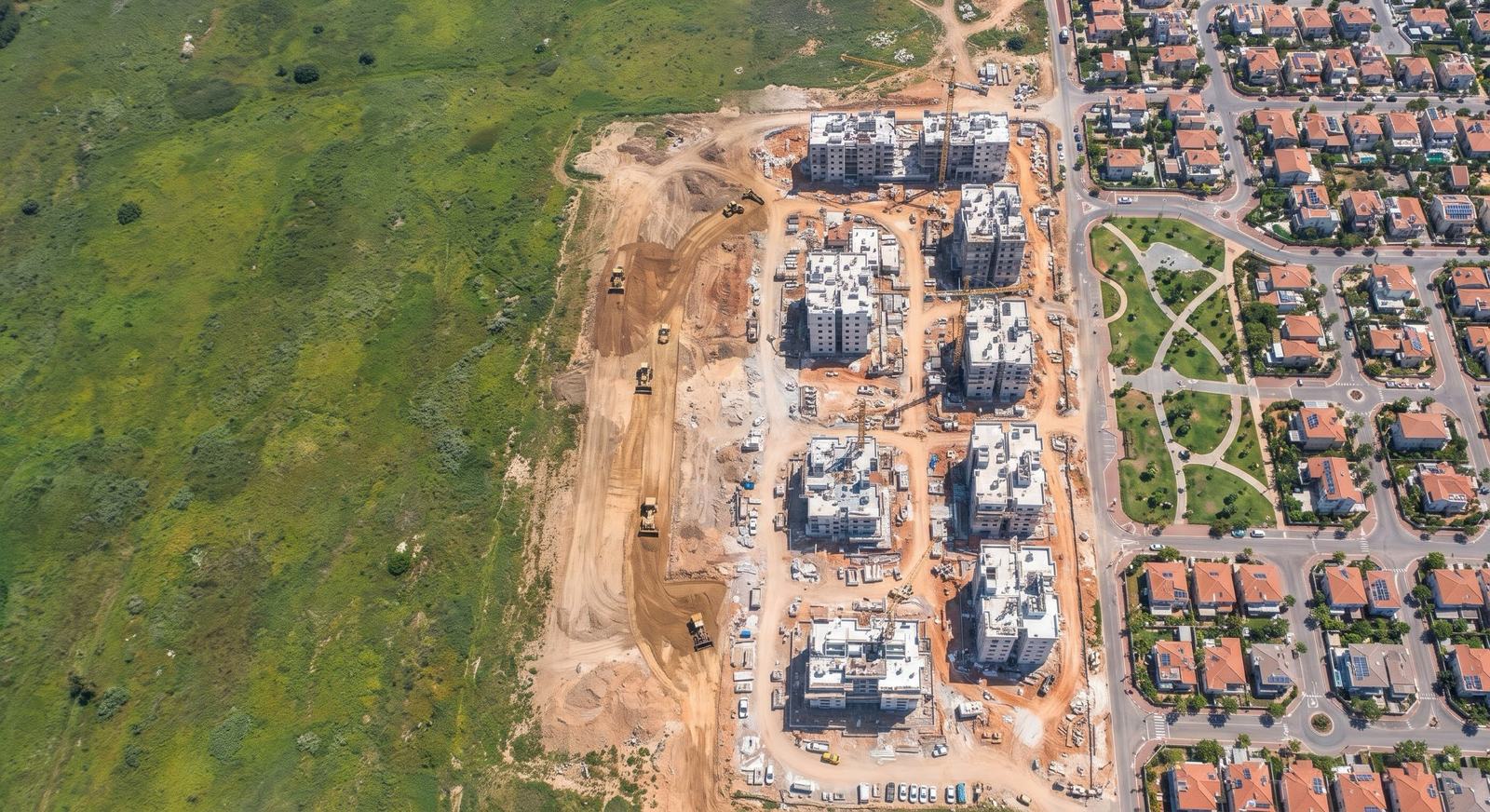
- There is a planning direction, but there is no detailed plan yet. The land is still agricultural. The price is low, and the risk and the time are the highest.
- 2. Growth
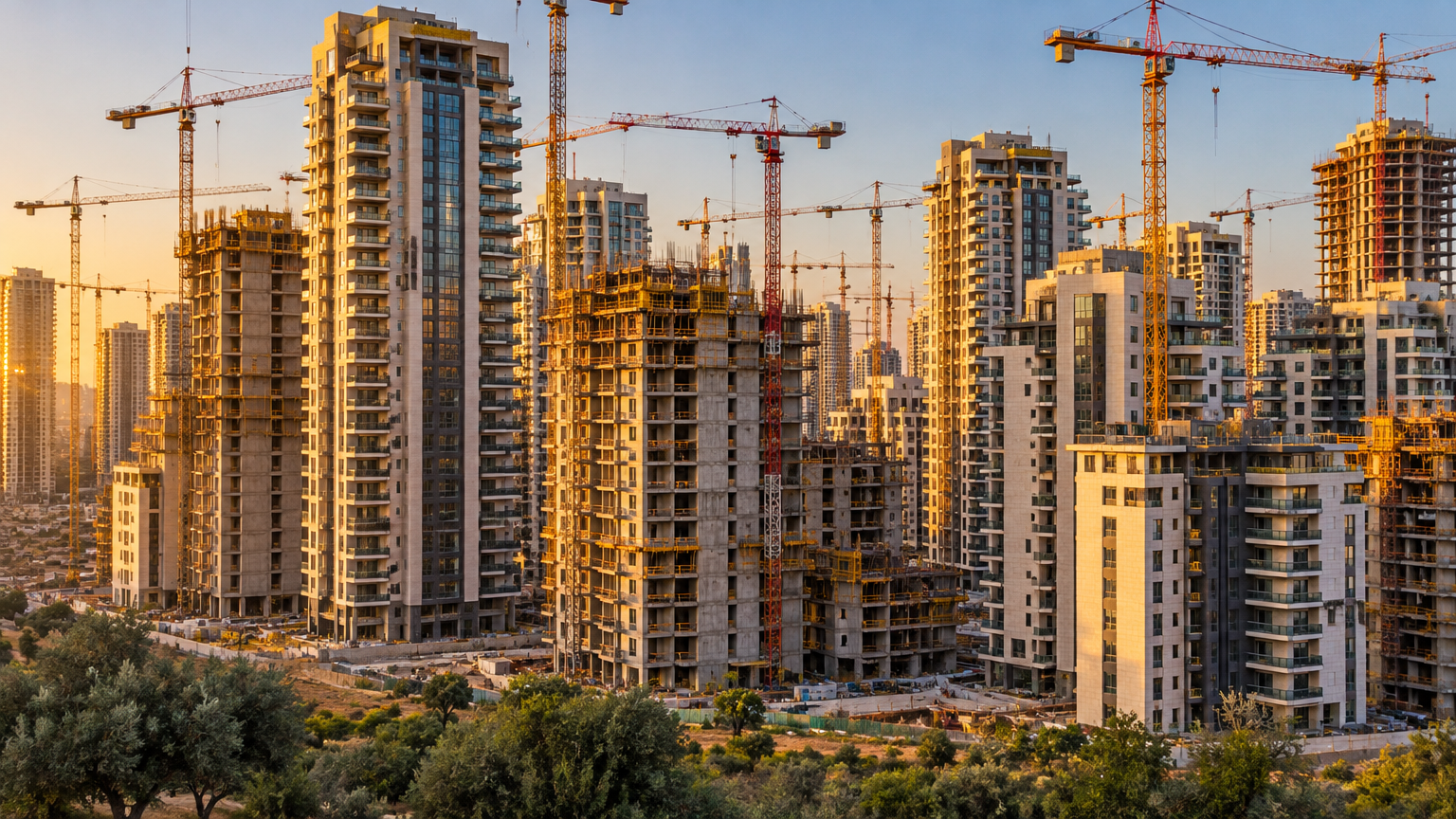
- An approved plan, roads being paved, ILA tenders, developers coming in. The price rises fast, and the risk falls.
- 3. Maturity
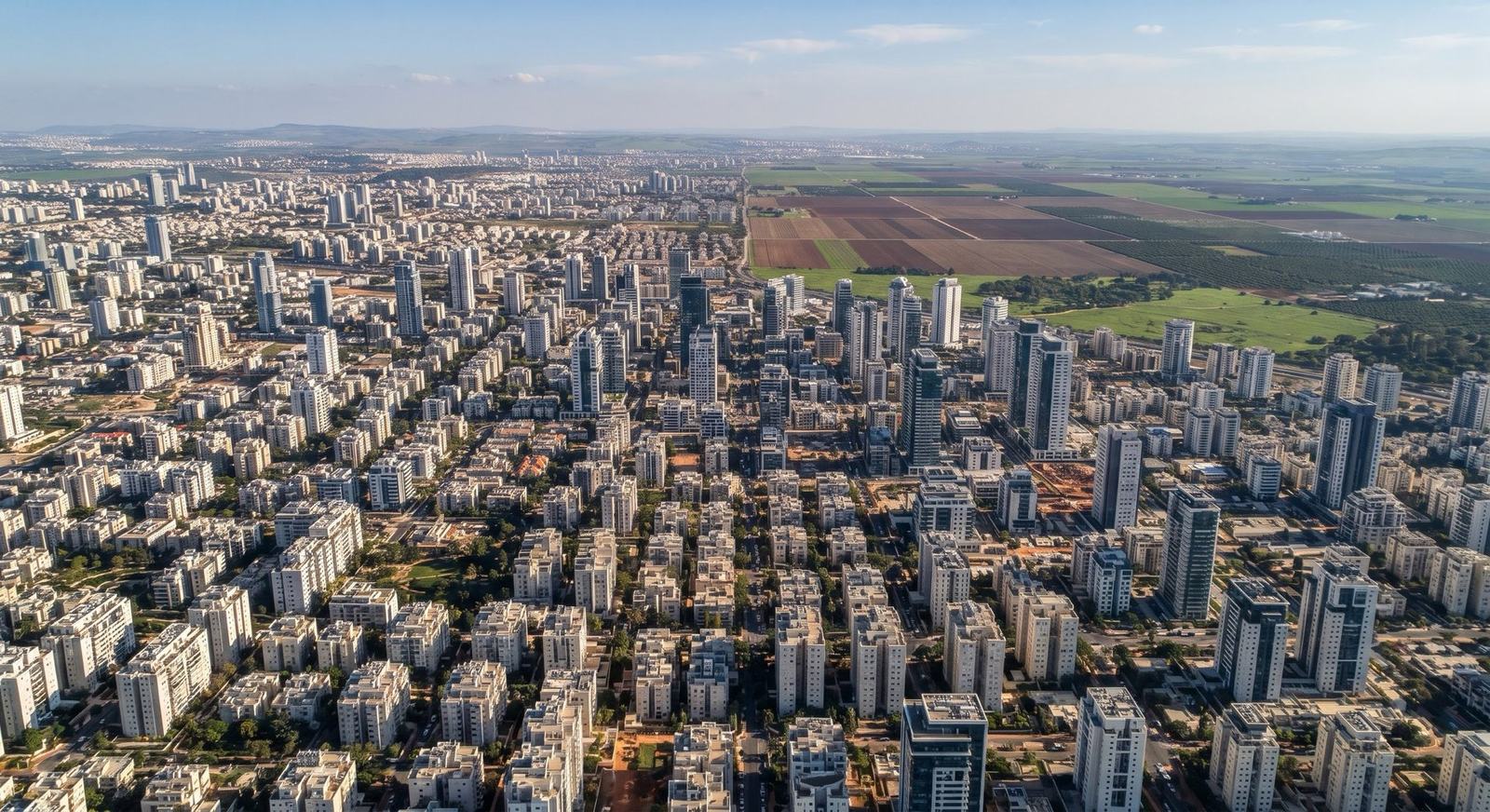
- The neighborhoods are populated, the services are operating, little land is vacant. Prices are high and stable.
- 4. Decline
- The buildings age, the population changes, the value lags behind new areas nearby.
- 5. Renewed growth
- Urban renewal, a new transit line or a comprehensive outline plan bring the demand back. On renewal: evacuate-and-rebuild (pinui-binui).
Signs that tell you what stage you are at
PlanningIs there a comprehensive outline plan that marks development? A detailed plan on deposit? This answer separates initiation from growth.
InfrastructureA road, a rail line or a station whose budget has been approved and where works have begun. A plan without a budget still belongs to the initiation stage.
Actual constructionILA tenders nearby, cranes, construction starts. ILA tenders and past transactions can be seen in open databases.
PopulationGrowth in the number of residents, new educational institutions, commerce opening. These are signs of growth or maturity.
The market itself goes through cycles
The market as a whole also moves. According to the CBS land price index, which is based on ILA tenders, residential land prices have risen by about 250% since 2004. In 2025 the index fell by 4.9%, and since the 2022 peak a cumulative decline of about 25% has built up. The decline was not uniform: land for high-density construction fell by about 3.9%, and land for single-family homes by about 18.1%.
What the index does not measure: private transactions in agricultural land before a change of land designation. There the price depends mainly on the planning stage of the area, and less on the state of the market in that year.
Checklist: reading an area in ten minutes
- 01Is there a comprehensive outline plan that marks development in the compound?
- 02Is there a detailed plan, and what stage is it at?
- 03Is there infrastructure whose budget has been approved?
- 04Are there ILA tenders or construction in the immediate surroundings?
- 05What has happened to transaction prices in the compound in recent years? Compare by the median, not the average.
FAQ
At what stage is it worth buying land?
There is no stage that is right for everyone. At initiation the price is low and the risk and the time are high. At growth the price is higher and the certainty is greater. The choice depends on the investment horizon and on risk tolerance.
Does a fall in the land price index mean my land has fallen?
Not necessarily. The index is based on ILA tenders for land ready for construction. Agricultural land before a change of land designation is affected first of all by the progress of the planning.
Will an area in decline grow again?
Sometimes, but only with a real trigger: a renewal plan, new transportation or a change in planning policy. Without such a trigger it is a hope, not a plan.
Summary
The life cycle of an area is a simple way to ask what you are buying: potential that has not yet materialized, a plan that is already on the way, or stability. Each stage has a different price, a different risk and a different time frame. The information in this article is general and is not investment advice.
Further reading and tools on the site
Articles
- The Strategic Plan for 2050
- Comprehensive Outline Plan
- Population density
- Risks of investing in land
- How much is agricultural land worth
Tools and pages
Sources