- About 76 thousand
- housing units approved in evacuate-and-rebuild plans in 2025
- 13,066
- housing units received building permits in evacuate-and-rebuild in 2025
- 66%
- of apartment owners: the majority that allows legal action against a holdout owner
What is evacuate-and-rebuild
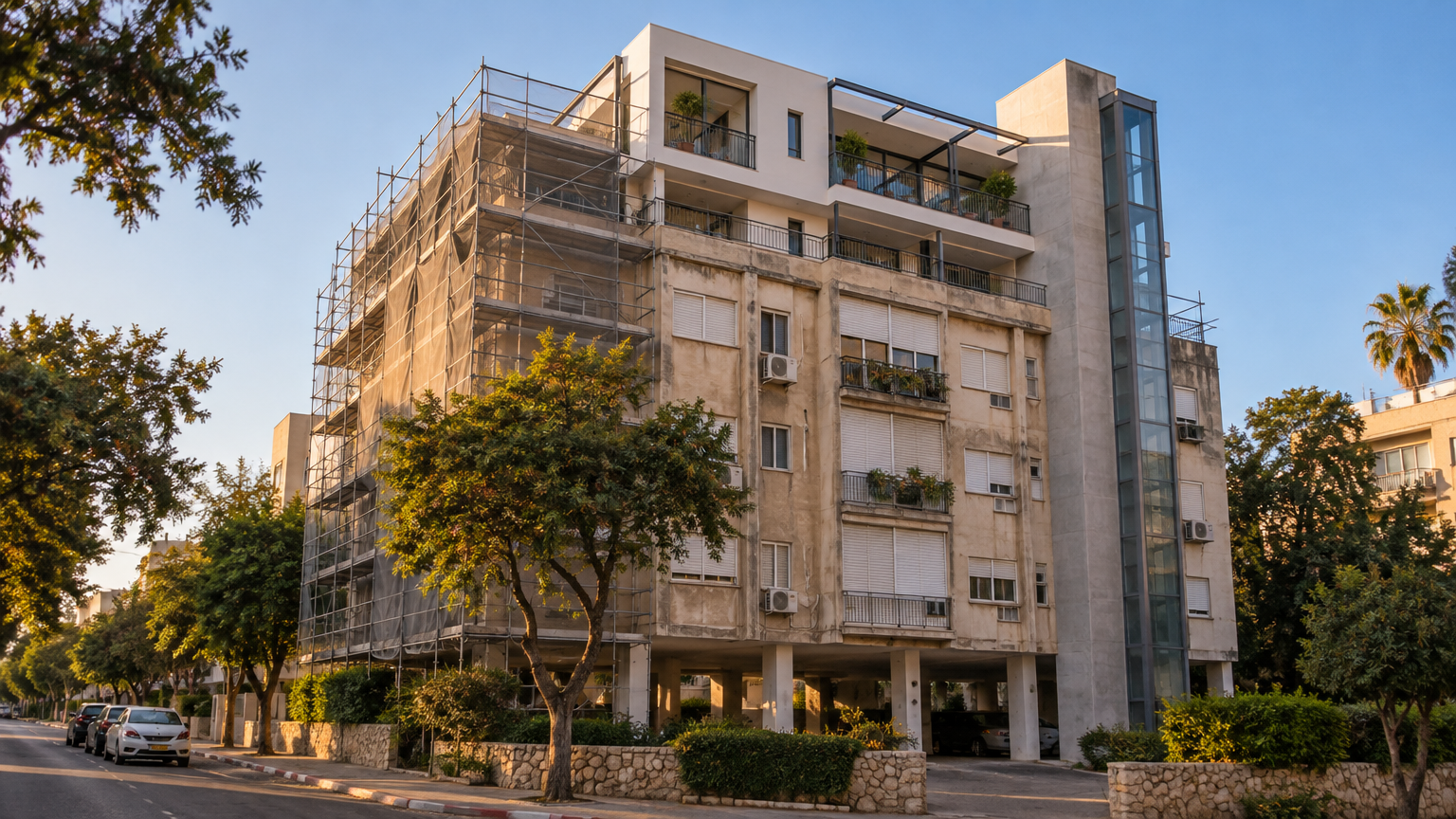
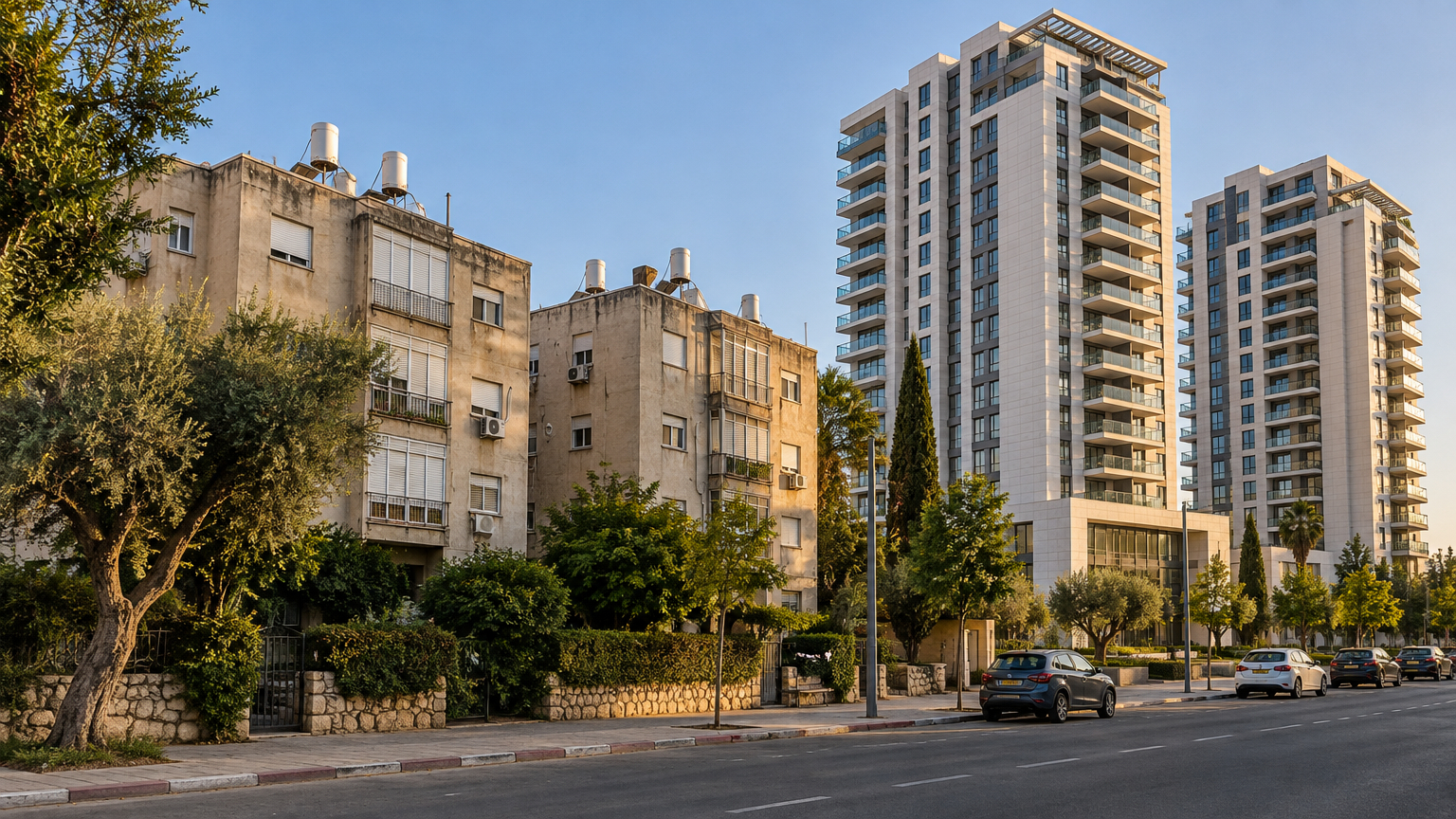
Evacuate-and-rebuild (pinui binui) is an urban renewal project, usually in a compound of several older buildings. The apartment owners sell the developer their old apartment and the building rights, and in return receive a new apartment in the same location. The developer demolishes the buildings, builds taller ones, and sells the additional apartments on the open market. These sales fund the construction and generate the developer's profit.
The difference from TAMA 38: TAMA 38 usually involves a single building, under a building permit. Evacuate-and-rebuild involves an entire compound, so a new plan is needed that changes what may be built. On the differences: TAMA 38.
The stages, from organizing to the keys
- 1Organizing and choosing a developer
The apartment owners choose a representative committee and their own lawyer, and compare offers from developers.
- 2Signatures
The apartment owners sign an agreement with the developer. Once a sufficient majority has signed, the project can move forward even against those who refuse.
- 3Compound declaration
The compound is declared an evacuate-and-rebuild compound. The declaration grants benefits, but it is not yet a plan.
- 4Detailed plan
The planning authority approves a new plan for the compound: how many apartments, how many floors and which public areas.
- 5Permit and bank financing
The developer obtains a building permit and bank project financing, and provides the apartment owners with guarantees.
- 6Evacuation, demolition and construction
The apartment owners move into rentals at the developer's expense until the new apartments are handed over.
How long it takes
A long time. The State Comptroller examined the field in 2026 and cited the Brandeis compound in Ra'anana as an example: from the start of planning in 1999 to occupancy in 2022, about 23 years passed. According to the report, projects with many new apartments relative to the existing ones are often less profitable for the developer, and so are less likely to be carried out.
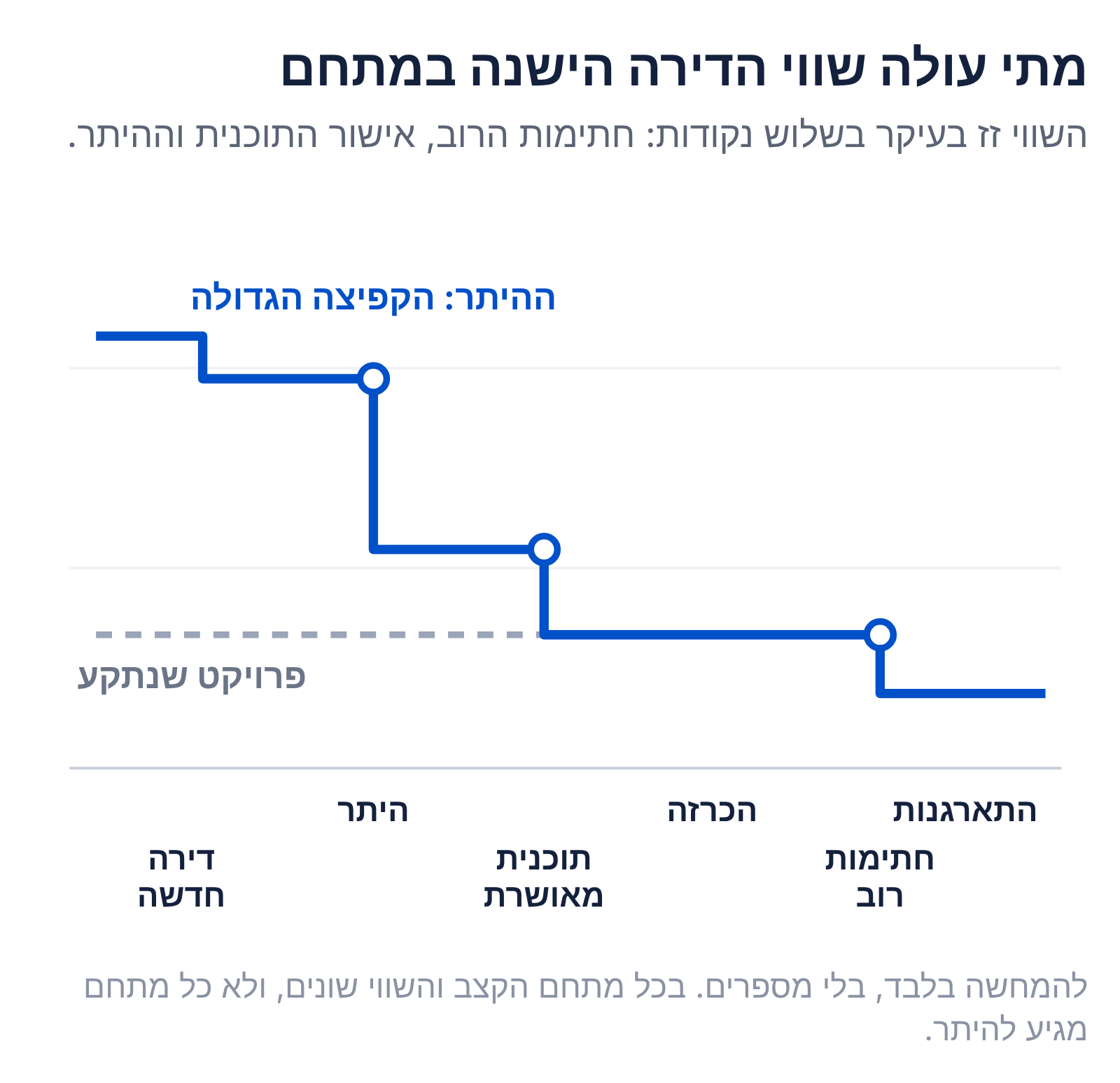
The value of an old apartment in the compound usually rises in stages, not all at once. According to professionals in the field, the stages that move it are the signatures of a majority of residents, approval of the plan, and above all the building permit.
What apartment owners receive
A new apartmentUsually larger than the old apartment, in a new building. The size and specifications are set in the agreement with the developer.
Rent during constructionThe developer pays the apartment owners rent from the evacuation until handover. The Israel Tax Authority has ruled that these payments, for the period set by law, are not subject to income tax.
Tax exemptionsAn apartment owner who sells all of their rights to the developer may receive an exemption from real-estate capital gains tax (mas shevach), under the conditions set by law. This exemption does not come at the expense of other exemptions they are entitled to.
Options for elderly apartment ownersThe Israel Tax Authority also recognizes other forms of consideration, for example two small apartments instead of one, or a small apartment plus a cash payment.
The required majority and holdout owners
A project does not require everyone's signature. In 2021, the law lowered the majority required to sue apartment owners who refuse from 80% to 66% of the apartment owners in the compound. Within the compound, each building requires a majority of at least 60%.
An owner who refuses without reasonable cause may be sued for the damage they caused. On the other hand, apartment owners have protections: the Organizers Law of 2017 regulates those who collect residents' signatures on behalf of a developer, and the Commissioner for Residents' Inquiries at the Urban Renewal Authority investigates complaints, for example about unreasonable pressure to sign.
Buying an apartment in a pinui binui compound? What to check
Buying an old apartment in a compound in order to receive a new apartment in the future is a well-known investment. But the price of such an apartment already includes part of the expectation. So check what stage the project is really at, and don't rely on the sign at the entrance.
- 01What the compound's status is. A rumor, a declaration, an approved plan or a permit. Each stage is a different risk.
- 02Check the plan in ERRA Analytics. Look up the block (gush) and parcel (helka), see whether a plan applies to the compound and what its status is, and compare with apartment deals in the compound and the surrounding area.
- 03How many apartment owners have signed. And which agreement, with which developer.
- 04Who the developer is. Projects they have completed, bank financing, and the guarantees they provide.
- 05What the agreement gives the apartment you are buying. Size of the new apartment, floor, parking, storage unit and rent.
- 06What the multiplier is. How many new apartments will be built for each existing apartment. A multiplier that is too high can hurt feasibility.
- 07How long you can wait. And what happens to the money if the project gets stuck.
In one sentenceAs with land, in pinui binui too, value is created through approvals, so what matters is the planning stage, not the promise.
On the similarity to land risks: Risks of investing in land. And on the comparison between the two options: Apartment or land.
FAQ
What is the difference between pinui binui and TAMA 38?
TAMA 38 usually deals with a single building and is carried out under a permit. Pinui binui deals with an entire compound and requires a new plan.
How long does a pinui binui project take?
Usually many years, sometimes more than a decade. In the Brandeis compound in Ra'anana, about 23 years passed from the start of planning to occupancy.
How many apartment owners need to agree?
Once 66% of the apartment owners in the compound have signed, and at least 60% in each building, those who refuse without reasonable cause can be sued.
Do apartment owners pay tax?
An apartment owner who sells all of their rights to the developer can receive an exemption from real-estate capital gains tax (mas shevach), under the conditions set by law. The rent the developer pays during construction is not subject to income tax, for the period set by law.
Is it worth buying an apartment in a pinui binui compound?
It depends on the stage, the developer, the agreement and the price. The further the project has progressed, the lower the risk and the higher the price.
Summary
Pinui binui replaces an old compound with new buildings, and the apartment owners receive a new apartment. The process is long, and value is created in stages: signatures, an approved plan and a permit. Anyone buying an apartment in a compound first checks the stage, the developer and the agreement. The information in this article is general and is not legal advice.
Further reading and tools on the site
Articles
- TAMA 38: what's left of it and what has replaced it
- Apartment or land: what to invest in
- Betterment levy
- How to check land and plans yourself
- Risks of investing in land
Tools and pages
- ERRA Analytics: all plans and transactions on every parcel
- Land profit calculator
- Our projects
- Properties for sale
Sources
- 01Government Authority for Urban Renewal: Urban Renewal Report for 2025
- 02ice: 186 pinui binui plans and 13,066 housing units in permits in 2025
- 03State Comptroller 2026: Urban Renewal (summary)
- 04Globes: the majority required for pinui binui lowered from 80% to 66%
- 05Economic Arrangements Law 2021: the majority in each building and in the compound (legal review)
- 06Kol Zchut: real-estate capital gains tax exemption in pinui binui
- 07ynet: Tax Authority says rent from the developer is not taxable
- 08Israel Tax Authority: Taxation of special forms of consideration for elderly apartment owners
- 09Commissioner for Residents' Inquiries, Urban Renewal Authority
- 10ynet: Which stages move the price of an apartment in the complex