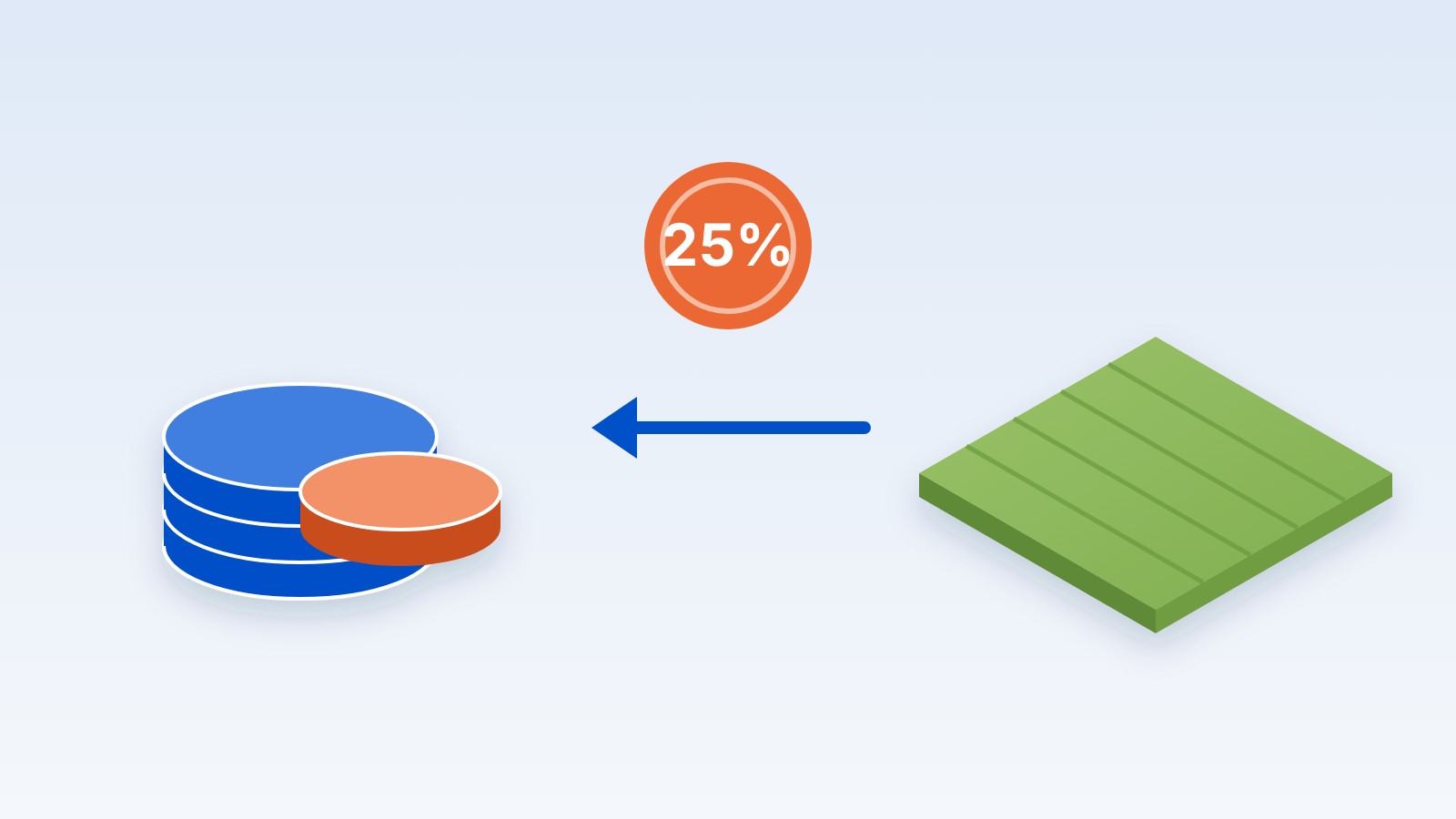
- 25%
- of the real gain, for individuals
- 60
- days from the transaction to pay the tax
- 7.5%
- of the price: advance paid by the buyer
What is capital gains tax
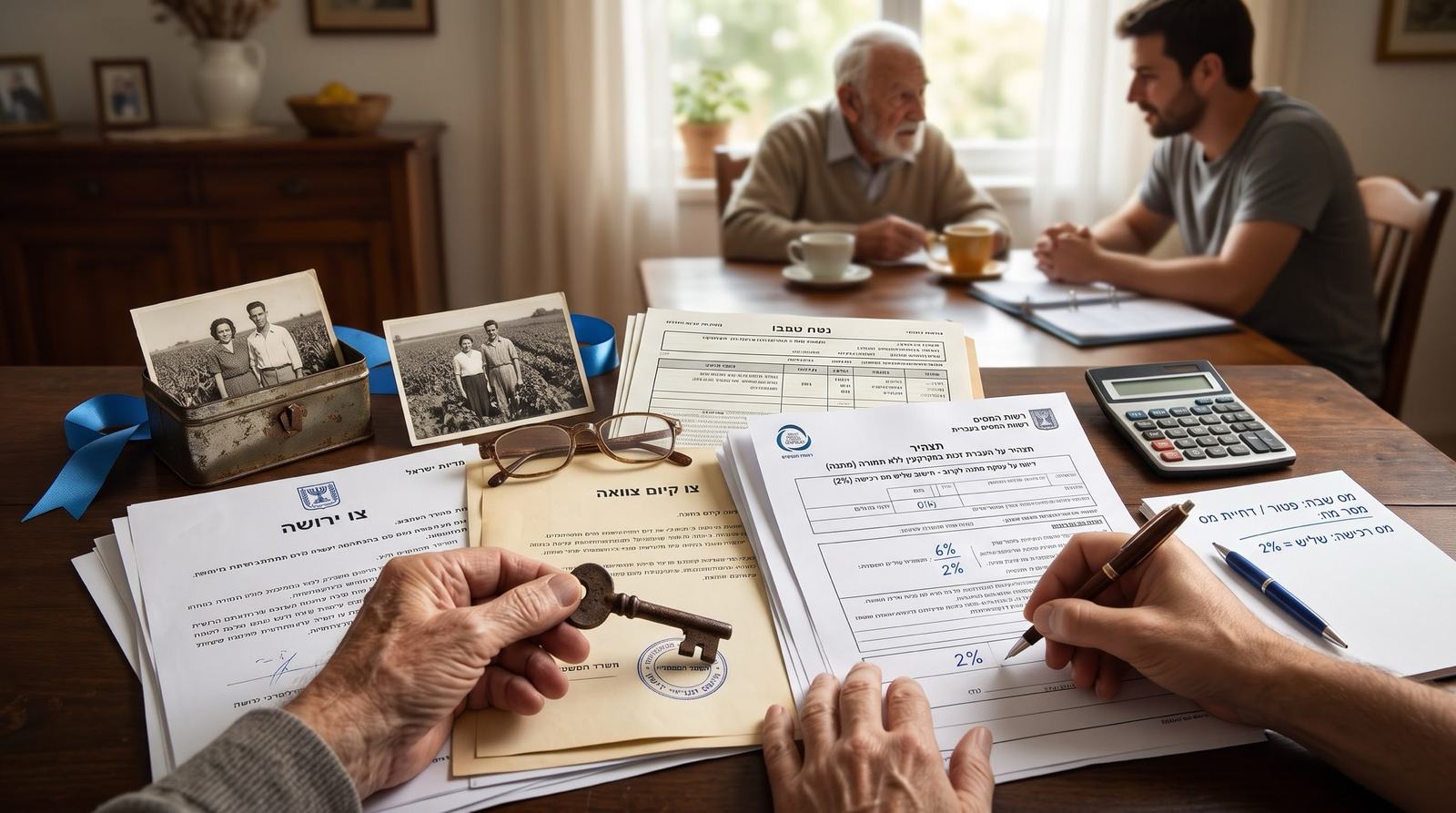
Real-estate capital gains tax is a tax on the profit from selling a right in real estate. It applies to land, to apartments and to any registered right, including a share in a parcel. The seller is liable for the tax, and the tax goes to the state, to the Israel Tax Authority.
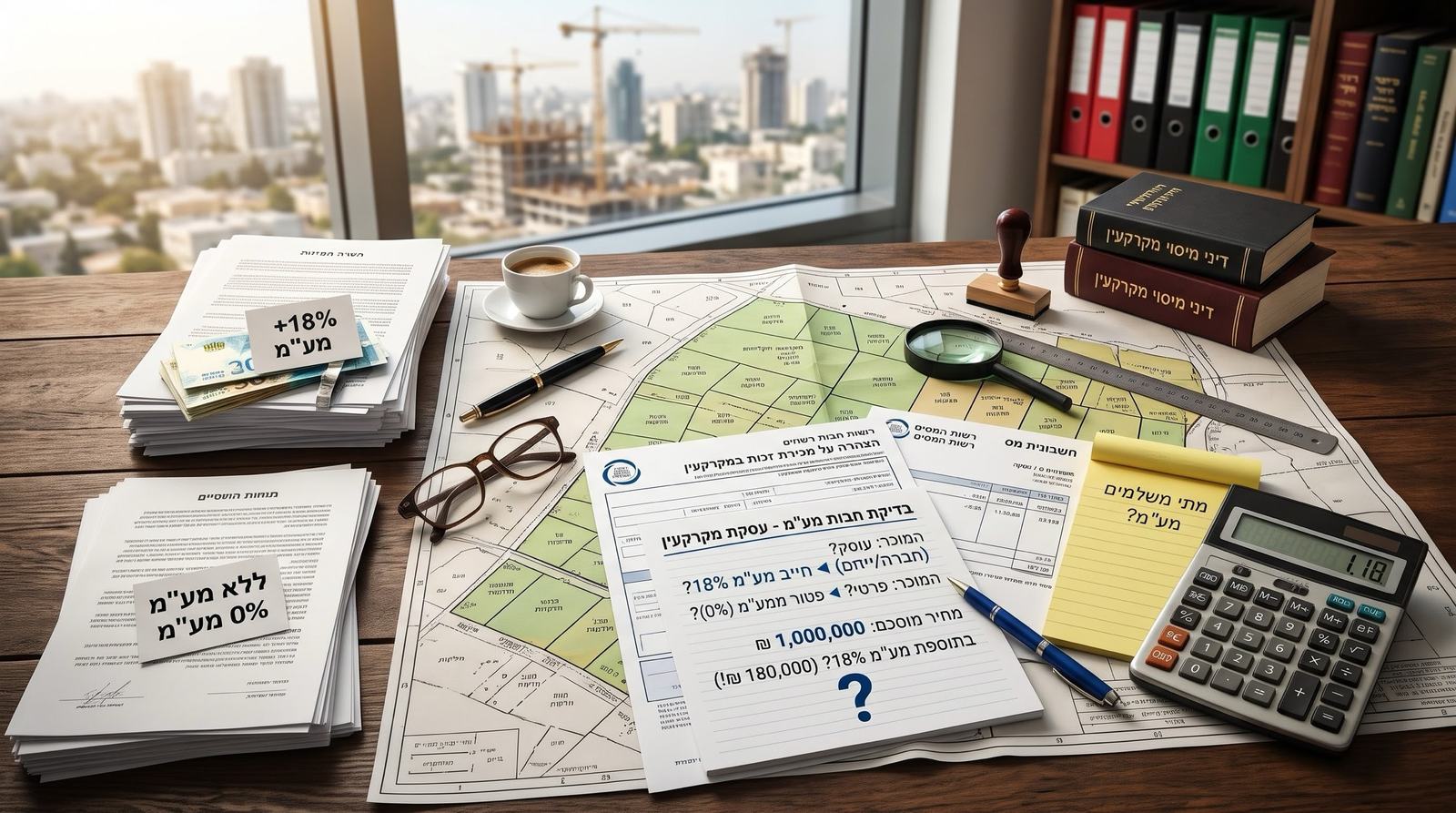
Don't confuse it with the betterment levy (hetel hashbacha). The betterment levy goes to the local authority and is calculated on the increase in value due to a plan. Capital gains tax is calculated on the actual profit, from the purchase price to the sale price.
How it's calculated, step by step
- 1Sale value
The price you received in the transaction.
- 2Adjusted purchase value
The price you paid, linked to the consumer price index from the day of purchase to the day of sale.
- 3Recognized expenses
Lawyer, appraiser, brokerage and more; these are also linked to the index. They are deducted.
- 4The real gain
What remains: the sale value minus the adjusted purchase value and minus the expenses.
- 5The tax
The tax rate multiplied by the real gain. For an individual who bought in 2012 or later, the rate is 25%.
Indexation matters: it neutralizes inflation, so you pay only on the real profit. The more years you've held the land, the larger the indexation component becomes.
A worked example
An individual bought a share in land in 2024 for 300,000 ₪ and sold it in 2030 for 600,000 ₪. Assume the index rose by 15% over those years, and that the recognized expenses were 30,000 ₪ after indexation. The figures are for illustration only.
| Item | Amount |
|---|---|
| Sale value | 600,000 ₪ |
| Adjusted purchase value, after 15% indexation | 345,000 ₪ |
| Recognized expenses, after indexation | 30,000 ₪ |
| Real gain | 225,000 ₪ |
| Capital gains tax, 25% | 56,250 ₪ |
Without indexation and expenses, the tax would be calculated on 300,000 ₪ and come to 75,000 ₪. That's why you keep every receipt from the day you buy. To test your own scenarios, with time and leverage: land profit calculator.
Long-held land: linear calculation
The tax rate has changed over the years. Anyone who bought before 2012 splits the gain by time: each period is taxed at the rate that applied in it. The split is made by number of days, regardless of when the land actually rose in value.
| Portion of the gain accrued | Tax rate for individuals |
|---|---|
| Until 7.11.2001 | Marginal tax rate, up to 47% |
| From 7.11.2001 to 1.1.2012 | 20% |
| From 1.1.2012 onward | 25% |
In one sentenceAnyone who bought land in 2012 or later pays 25% on the entire gain. The linear calculation is relevant only to those holding land bought long ago.
High capital income is also subject to surtax (mas yesef). From 2025 it is 5% on capital income above 721,560 ₪ a year. A large sale can cross this threshold, so it is worth planning the timing of the sale in advance.
Which expenses you may deduct
The law recognizes every expense incurred in connection with the purchase or the sale. The main ones:
- Attorney's fees
- On the purchase and on the sale.
- Brokerage fees
- Up to 2% of the price, on both the purchase and the sale.
- Appraiser and surveyor
- The fees of a real-estate appraiser and of a licensed surveyor.
- Government fees
- Fees paid in connection with the purchase of the land, for example for registration at the Land Registry (Tabu).
- Improvement expenses
- Expenses that increased the value of the land, for example planning you paid for as one of the owners.
Each expense is linked to the index from the day it was paid. Without a receipt, the Tax Authority will not recognize it.
When and how you pay
- 01Report. A declaration to the Tax Authority, together with the buyer, within 30 days of signing.
- 02The buyer pays an advance. On account of the seller's tax: 7.5% of the price if the seller bought after 7.11.2001, and 15% if they bought before.
- 03Pay the tax. Within 60 days of the transaction date, based on a self-assessment. The signing date is the transaction date.
- 04Get the clearance. Without clearance from the Tax Authority, the buyer cannot be registered at the Land Registry (Tabu).
What this means for those buying land as an investment
Keep every documentThe contract, receipts, fees and payments for planning. Each of them reduces your gain in the future.
Think netThe profit that matters to you is the one after real-estate capital gains tax (mas shevach) and betterment levy (hetel hashbacha). Compare it with the alternatives, for example an investment apartment.
Reparcellation is not a saleWhen your parcel is exchanged for a plot under the plan, there is usually no capital gains tax, as long as no balancing payment was made. Details in the article on reparcellation.
Timing mattersThe sale date determines the index, the surtax threshold and sometimes the rate. Check with a tax advisor before signing.
On the buyer's side, including a 6% purchase tax (mas rechisha) on land: the guide to buying land.
FAQ
How much real-estate capital gains tax (mas shevach) is paid on selling land?
An individual pays 25% of the real gain, that is, of the profit after linkage to the index and recognized expenses. For land bought before 2012 the calculation is linear, and for part of the period the rate is different.
Is there an exemption from capital gains tax on land?
The single-apartment exemption does not apply to land. There are exemptions in special circumstances, for example a transfer without consideration to a relative, and usually also the exchange of a parcel for a plot in reparcellation.
When is capital gains tax paid?
Within 60 days of the transaction date, which is the date the contract is signed. The buyer transfers an advance payment on account of the tax.
What is the difference between real-estate capital gains tax (mas shevach) and the betterment levy (hetel hashbacha)?
Capital gains tax goes to the state and is charged on the profit from the sale. The betterment levy goes to the local authority and is charged on the increase in value resulting from a plan. When selling land that has increased in value due to a plan, you may have to pay both.
Can I deduct the purchase tax (mas rechisha) I paid?
Purchase tax is an expense connected with the purchase, and it is usually deductible. Check your specific case with an accountant or a lawyer.
Summary
Real-estate capital gains tax on land is 25% of the real gain for an individual. Indexation and recognized expenses reduce it, so keep your documents from day one. The information in this article is general and does not constitute tax or legal advice.
Further reading and tools on the site
Articles
- Guide to buying land for investment
- Change of land designation: the 7 stages
- Land or an apartment: which is the better investment
- Reparcellation without the owners' consent
Tools and pages
- ERRA Analytics: all plans and transactions on every parcel
- Land profit calculator
- Mortgage and apartment investment calculators
- Our projects
Sources
- 01Real Estate Taxation Law (Capital Gains and Purchase), 1963, Sections 39, 47, 48A and 51
- 02Israel Tax Authority: Guide for sellers and buyers of real-estate rights, 2026
- 03Kol-Zchut: Paying real-estate capital gains tax
- 04Kol-Zchut: Advance payment of real-estate capital gains tax by the buyer
- 05Kol-Zchut: Recognized Deductible Expenses When Calculating Real-Estate Capital Gains Tax
- 06Alex Shapira & Co.: Linear calculation of the gain by period
- 07Bizportal: Real-estate capital gains tax in 2026, the rate and the calculation